


Chicken has earned its spot as America’s go-to protein, and the reason goes far beyond convenience.
It’s easy to find, easy to cook, and easy to work into just about any meal. But chicken also brings a lot to the plate nutritionally. It delivers high-quality protein, important vitamins and minerals, and the kind of versatility that makes healthy eating feel more realistic for everyday life.
From busy weeknight dinners to meal prep for athletes, chicken offers real nutrition without overcomplicating what’s for dinner.
Have you ever wondered what makes chicken a healthy choice or how much protein it provides? This guide answers those questions, highlights the nutritional benefits of chicken, and explores how it can fit into a variety of eating styles while helping you make the most of your meals.
The Short Answer
Yes, chicken is good for you. It’s a high-quality, complete protein that contains all nine essential amino acids your body needs.
Chicken is also:
- High in protein (provides 20% or more of the Daily Value of protein)
- Naturally rich in vitamins and minerals
- Available in lean cuts like skinless chicken breast or more flavorful choices like chicken thighs
- Fits a variety of eating patterns and nutrition goals
- Great for meal prep, quick lunches, and easy weeknight dinners
A 3 oz cooked chicken breast contains 24 grams of protein, while a 3 oz cooked chicken thigh contains 22 grams of protein. Both offer valuable nutrition, with slightly different strengths.
Why Nutrition Matters in Protein Choices
Today’s shoppers are paying closer attention to what fuels their bodies. Protein has moved beyond athlete-only territory and become a mainstream wellness priority for families, busy professionals, active adults, and anyone trying to build a more balanced plate.
The right protein can support energy, satiety, muscle health, and overall well-being. It can help you feel fuller longer, recover after activity, and stay consistent with healthier eating habits. By the way, it also tastes great.
That’s where chicken fits so naturally.
Chicken sits at the intersection of nutrition, affordability, and ease. That’s one reason it continues to stand out when comparing chicken vs. other proteins for everyday meals. It works across different budgets, cooking styles, and dietary preferences, making it one of the most practical lean protein sources available.
Smart protein choices are one of the simplest ways to support a healthier lifestyle, and chicken makes that choice easy to come back to again and again.
Chicken Is a High-Quality, Complete Protein
One of the biggest chicken nutrition benefits is its protein content.
Chicken is a complete protein, meaning it contains all nine essential amino acids the body cannot make on its own. Those amino acids help support muscle growth, tissue repair, and many of the body’s everyday functions.
That’s one reason chicken is such a popular choice for muscle building, athletic meal prep, and everyday wellness.
How Much Protein Is In Chicken?
The exact chicken protein content depends on the cut, portion size, and cooking method, but here are helpful numbers to know:
- A 3 oz cooked chicken breast contains 24 grams of protein
- A 3 oz cooked chicken thigh contains 22 grams of protein
That means chicken offers one of the highest protein-per-calorie ratios of any everyday whole food.
For anyone tracking protein per ounce of chicken, a simple estimate is about 7 to 9 grams of protein per cooked ounce, depending on the cut.

Why Protein Matters
Protein helps your body build, repair, and maintain muscle. It also supports satiety, which means it can help you feel fuller longer after meals.
That makes chicken a smart option for active lifestyles, busy days, post-workout meals, and balanced eating goals. It can also be especially important for aging adults, since maintaining muscle mass becomes more important over time.
Few foods provide as much high-quality digestible protein in a single serving.
Is Chicken Breast or Thigh Healthier?
Both chicken breasts and chicken thighs can be part of a healthy diet.
Chicken breasts are leaner and slightly higher in protein per gram, making them a strong choice for shoppers focused on lean protein, meal prep, or lower-fat meals.
Chicken thigh nutrition looks a little different. Thighs contain more fat than breasts, but they also offer rich flavor, juicy texture, and important nutrients like iron and zinc.
The better choice depends on your goals, your recipe, and what kind of meal you want to make.
Chicken Provides Important Vitamins and Minerals
Chicken is often talked about for its protein, but that’s only part of the story. It also contains essential vitamins and minerals that support overall health.
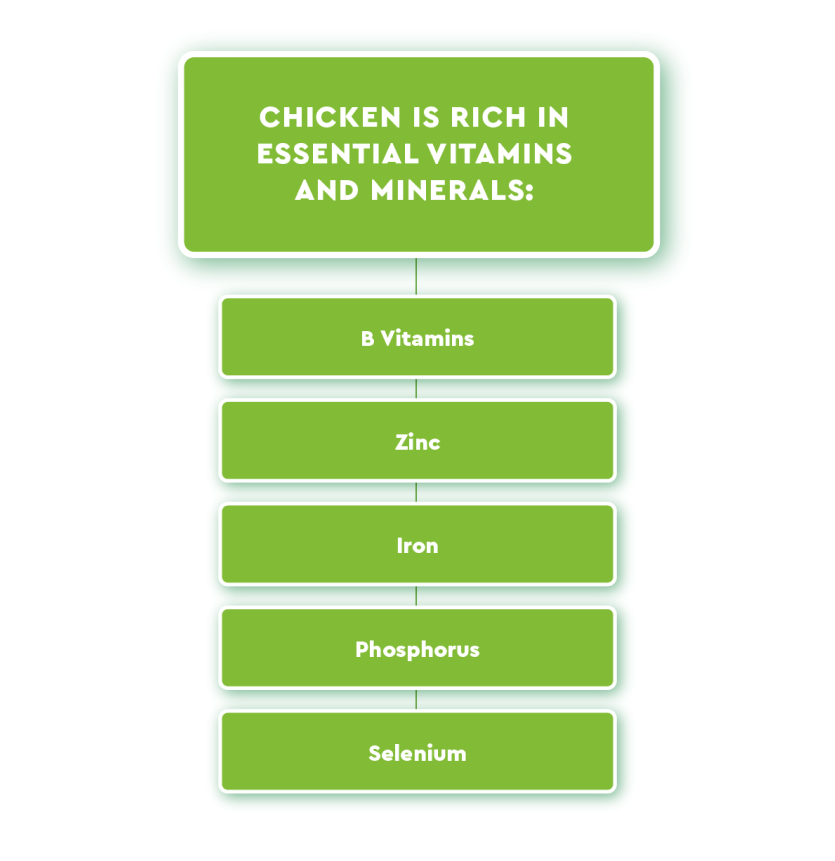
Chicken provides:
- B vitamins, including B6, B12, and niacin, which help support energy metabolism, brain function, and red blood cell production
- Selenium, an antioxidant that supports immune health and thyroid function
- Phosphorus, which helps support strong bones and teeth
- Zinc, especially in dark meat, which supports immune function and wound healing
- Iron, found in higher amounts in dark meat, which helps support oxygen transport and energy levels
Every bite of chicken is doing more than satisfying hunger. It’s helping support energy, immunity, and overall wellness.
Is Dark Meat Chicken Bad for You?
No. Dark meat chicken is not bad for you.
Dark meat contains more fat than white meat, but it also delivers valuable nutrients, including iron, zinc, and B vitamins. It also tends to stay juicer during cooking, which can make meals more satisfying.
White meat and dark meat each have their own strengths. White meat is leaner. Dark meat is richer and more flavorful. Both can belong in a balanced diet.

Chicken Supports a
Wide Range of Eating Styles
Another reason chicken has become such a wellness staple is its flexibility.
It works across cuisines, lifestyles, and dietary patterns without requiring specialty ingredients or complicated prep. One package of chicken can become a Mediterranean-style bowl, a high-protein salad, a sheet-pan dinner, a stir-fry, or a simple grilled entrée.
Chicken fits naturally into:
- High-protein and macro-tracking diets
- Mediterranean eating patterns
- Low-carb meals
- Keto, paleo, and Whole30-style approaches
- Family-friendly meal planning
- Post-workout and athletic recovery meals
- Naturally gluten-free and dairy-free meals
That flexibility matters because healthy eating only works when it feels sustainable.
Chicken can serve the whole household, even when everyone is eating a little differently.
Chicken for Athletes, Muscle Gain, and Active Lifestyles
Chicken has long been a favorite for athletes because it delivers a lot of protein without a lot of complexity.
For muscle gain, chicken provides the complete protein your body needs to support muscle repair and growth after training. For active lifestyles, it’s easy to prep ahead, portion out, and pair with carbohydrates and vegetables for balanced recovery meals.
Chicken nutrition for athletes does not have to mean eating the same plain chicken breast every day. Thighs, tenderloins, drumsticks, and wings can all play a role depending on the meal, cooking method, and nutrition goals.
The best chicken cut for a high-protein diet is often skinless chicken breast, but it is far from the only option.
Chicken, especially the breast, is naturally low in saturated fat that fits into heart-healthy and calorie-conscious diets.
Is Chicken Good for Weight Loss?
Chicken can be a helpful part of a weight-loss plan because it is high in protein and can be prepared in many lighter ways.
Protein supports fullness, which may help make meals feel more satisfying. Skinless chicken breast is especially popular for weight-conscious eating because it offers high protein with relatively low fat.
Preparation matters, too. Grilled, baked, roasted, or air-fried chicken can support balanced meals when paired with vegetables, whole grains, beans, or other nutrient-rich sides.
Chicken Makes Everyday Wellness Easier
Good nutrition is easier to maintain when it fits real life.
Chicken is widely available, easy to portion, easy to prep, and adaptable to nearly any flavor profile. It can be cooked quickly on a busy weeknight or prepared in advance for meals throughout the week.
That everyday convenience is part of its nutritional value.
A healthy protein choice only helps if people actually enjoy eating it and can make it consistently. Chicken supports wellness goals without making them feel like work.
It’s affordable nutrition that does not require special trips, specialty stores, or complicated recipes.
Is Chicken Healthy for Kids?
Chicken can be a great protein choice for kids because it is mild, familiar, and easy to prepare in kid-friendly meals.
It provides high-quality protein that supports growth, along with important vitamins and minerals. Tenderloins, shredded chicken, baked drumsticks, and simple grilled or roasted chicken pieces can all work well for family meals.
As with adults, the overall meal matters. Pairing chicken with fruits, vegetables, whole grains, or other nutrient-rich sides helps create a more balanced plate.

How to Maximize
Chicken’s Nutritional Benefits
Getting the most from chicken starts with choosing the right cut and cooking method for your goals.
For a leaner meal, choose skinless chicken breast or tenderloins and prepare them by grilling, baking, roasting, or air frying.
For more flavor and juiciness, choose thighs or drumsticks and pair them with vegetables, grains, or fresh sides.
To build a balanced plate, pair chicken with foods like:
- Roasted vegetables
- Leafy greens
- Brown rice, quinoa, or whole grains
- Beans or lentils
- Fresh herbs and citrus
- Olive oil-based sauces or marinades
Chicken also works beautifully in a Mediterranean diet, especially when paired with vegetables, herbs, whole grains, and heart-healthy fats.
Frequently Asked Questions
Is chicken good for you?
Yes. Chicken is a high-quality source of complete protein and provides important vitamins and minerals that support energy, muscle health, immune function, and overall wellness.
How much protein is in chicken?
A 3 oz cooked chicken breast contains 24 grams of protein, while a 3 oz cooked chicken thigh contains 22 grams of protein. Protein content may vary slightly by cut and preparation.
What are the health benefits of eating chicken?
The health benefits of chicken include high-quality protein, important vitamins and minerals, support for muscle maintenance, satiety, energy, and flexibility across many balanced eating styles.
Is chicken a complete protein?
Yes. Chicken is a complete protein because it contains all nine essential amino acids the body cannot produce on its own.
What vitamins are in chicken?
Chicken contains several important nutrients, including B vitamins such as B6, B12, and niacin, along with minerals like selenium, phosphorus, zinc, and iron.
How much chicken should I eat per day?
The right amount depends on your age, activity level, overall diet, and personal nutrition goals. Many people use a 3 to 4 oz cooked portion as a practical serving size for meals.
Is chicken breast or thigh healthier?
Both can be healthy choices. Chicken breast is leaner and slightly higher in protein per gram, while chicken thighs provide more flavor, juiciness, and nutrients like iron and zinc.
Is chicken good for weight loss?
Chicken can support weight-loss goals because it is high in protein and can help meals feel more satisfying. Lean cuts like skinless chicken breast are especially popular for calorie-conscious eating.
Eat Well with Confidence
Chicken has earned its place as a staple because it combines high-quality nutrition with everyday practicality.
It’s high in protein, rich in important vitamins and minerals, and flexible enough to fit nearly any meal, cooking style, or wellness goal.
At Just Bare, we believe eating well should feel simple, satisfying, and realistic. The more you understand what chicken brings to the plate, the easier it becomes to see it as more than a default protein. It’s a smart, intentional choice for meals that support the way you live.
* Chicken used is raised with no antibiotics ever.
† Federal regulations prohibit the use of hormones or steroids in poultry.
‡ Chickens are free to roam in barns