Page 3 – Just Bare Foods
Love Just Bare ? Leave us a review!

Where There’s Smoke

Drifting soon through an open window near you.

You can see it. Smell it. Taste it. Yet it’s not always easy to put a finger on what makes one of humankind’s oldest cooking techniques so appealing. Different people have different reasons for loving smoked foods. For some, it’s tradition. For earlier generations, it was a valuable preservation technique. And for everyone who enjoys the simplicity — all you need are heat, wood and an enclosed space to protect the food, control airflow and concentrate the smoke — many more enjoy the subtleties of the process. But when the final embers have glowed their last, one fact remains. Smoking provides unsurpassed flavor.

A common pre-cooking step involves brining. The goal is to keep the chicken — the white meat in particular — as moist and tender as possible while it’s smoking. Both pre-cut chicken and whole birds can be brined, 2-4 hours for individual parts and as long as 8-12 hours for entire chickens (in the 3-3½ pound range). A basic brining solution is simply water and sea salt or kosher salt (1 cup salt to 1 gallon water), but you can also add sweeteners such as sugar or honey, dried or fresh herbs and spices. Just keep the meat fully submerged in the refrigerator while you’re brining the chicken, and discard the brining solution when you’re through with it.

Woods working.

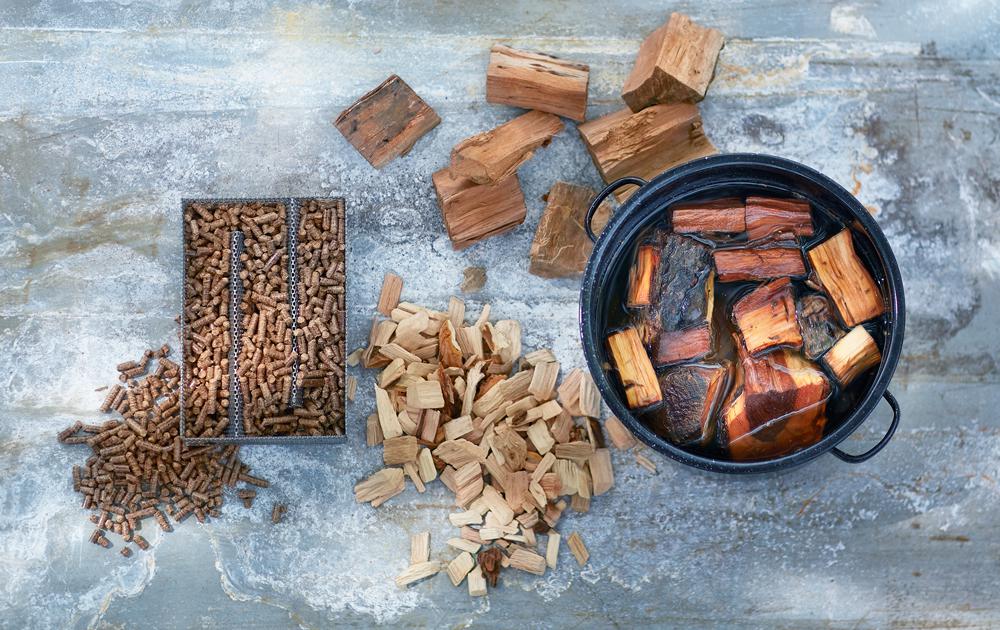
The variety of wood and wood products available today for smoking has never been better. Nearly every hardware store, grocery store and cooking specialty shop offers a selection ranging from more mild in flavor (pear, apple, cherry) to stronger (hickory, oak, mesquite). Your choice of wood also influences the color of the finished food. Apple or cherry is a classic wood for smoking chicken, and you can find it in chunk, chip or pellet form. Often, wood chunks or chips are soaked in water ahead of time to produce smoke without catching fire and creating flames. And note, wood isn’t the only thing people use for smoking. Tea leaves are another option, even indoors.

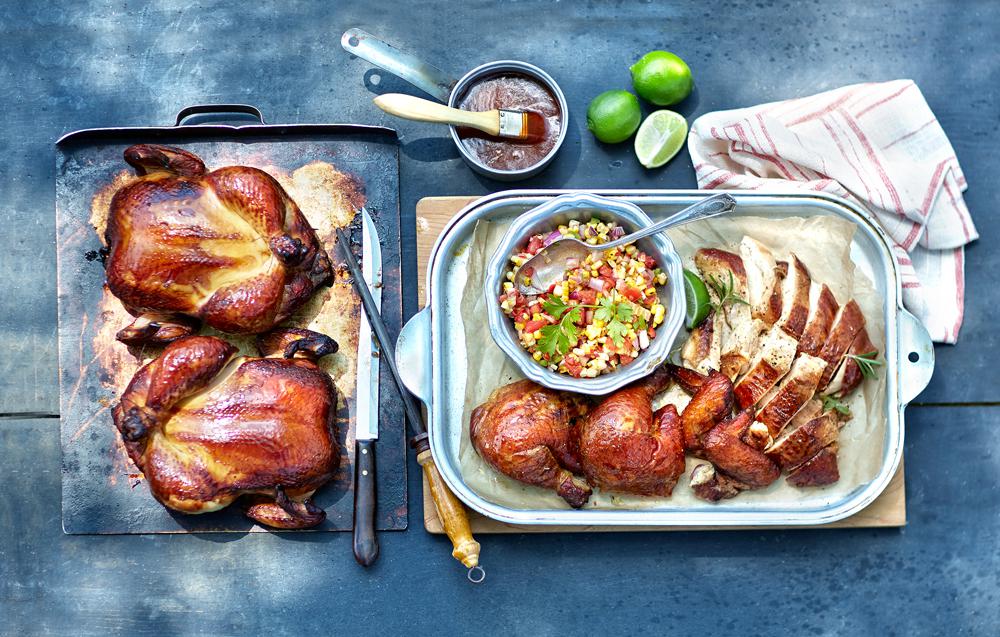
You brined the birds overnight. You patiently tended the fire and kept an eye on the chickens throughout the day. Now it’s time to serve Rosemary-Peppercorn Brined Smoked Whole Chicken. Beautiful and full of flavor, this is pure smoked perfection. But wait. There’s something else you can do just before the chicken is done. An hour or so beforehand, add some veggies — halved red onions and beefsteak tomatoes, corn on the cob and fresh chiles. That’s all you need to make a simple, healthy side dish, Smoky Summer Solstice Salsa. And don’t forget about the sauce. To keep things easy, start with an off-the-shelf BBQ sauce, and make it your own with simple variations – Smoky Chipotle, Asian Zing, Tropical Zest, Sweet & Savory and North African Heat.

Want more information about smoking chicken? Those two search words yield more than 58 million results in Google. Another good resource is your county or university extension office, which often provide a wealth of information about food and cooking such as this flyer from Texas A&M. And of course, be sure and sample the local fare from the pitmasters in your region. Will they give up their secrets? Probably not, but with enough time and practice, you’ll start discovering secrets of your own.

Rediscovering Sunday Dinners

Making a comeback.
Grandma and grandpa had things figured out. Take Sunday dinners, for example. For many families just a few generations ago, Sundays meant a big family meal, and more than one generation often sat down together. Family stories, humor and who’s-doing-what kept the conversation lively, and the personalities of old and young alike were on full display. And the meal itself? It often was the most special meal of the week, something that cooked for a while like a slowly-braised roast or crisply-roasted chicken.

Sundays in the modern generation are typically quite different. In many ways, Sundays are like the other days of the week — busy and plugged-in, full of distractions. But the idea of family rituals remains appealing, and a regular weekly meal is returning. And not just for nostalgia’s sake. Families are simply missing each other. It’s time to rediscover dinnertime.

Families that eat (and cook) together stay together.
Recent studies underscore the benefits for children in families that share meals together. Family meals boost better behavior, teach manners and let children practice talking to adults. Cooking together can also help promote core learning fundamentals like reading and math when kids measure ingredients, read instructions, set timers and monitor food safely. Even cleaning up afterwards can be fun and keep the conversation going, involving family members of any age.

Preparing food
Many hands make light the work.
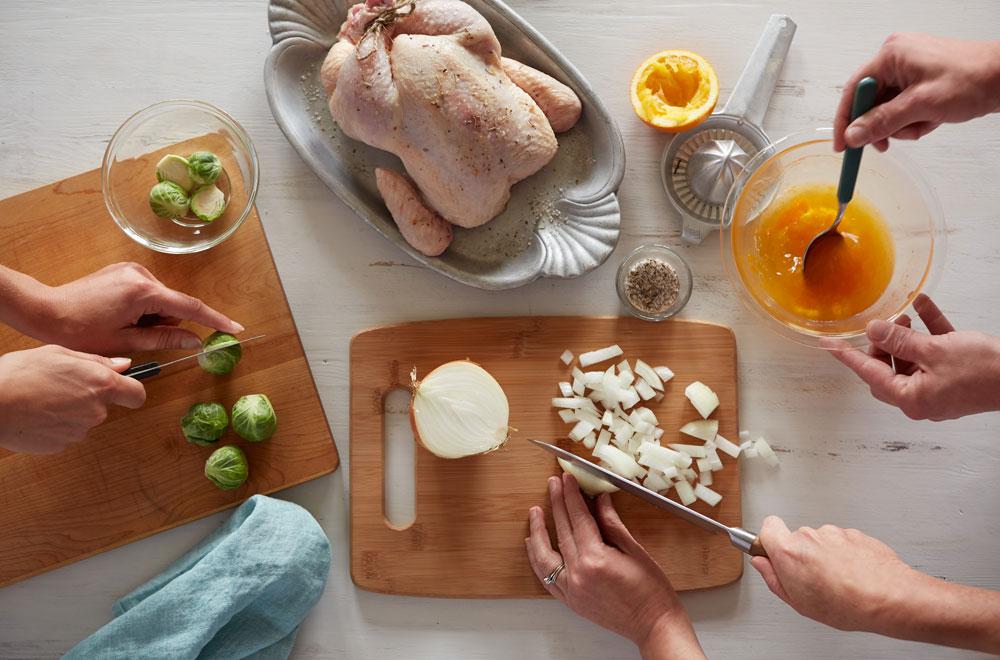
When everyone contributes to the meal — from setting the table to shaking up the salad dressing — family meals get even sweeter. Teamwork supports a sense of belonging and creates a unique identity that provides security for kids.

So when’s the right time for a family meal? Anytime! Sunday dinners are great, but if Fridays are better for make-your-own-pizza meals, or Mondays for slow-cooker-soup night, go for it. No matter what it takes, keeping things simple helps weekly meals become routine. Ask the family to help for menu suggestions. Being part of the planning process lets everyone take some ownership in creating pleasurable meals.

Turkey on table
A traditional foundation for Sunday dinners.
A whole roasted chicken is probably one of the most recognizable symbols of a Sunday dinner, and few meats cross so many borders or cuisines with so many possibilities. A simple chicken has a presence for special occasions when roasted and served whole, ready to be carved at the table.

Another option for making the most of a whole chicken is cutting it apart yourself, either for certain recipes and also for making stock. Because a whole chicken is about the best bargain in the meat department, knowing the knife technique and where to cut is a good idea. As this step-by-step guide demonstrates, it’s an easy process to learn.

Who’s ready to sit down for supper? Cell phones are off. Work email can wait. What happened at school today? Really? That reminds me of a story.

Presidents Day Fare

What’s #1 at 1600 Pennsylvania Avenue?
State dinners. Celebratory banquets. Working lunches. Private family meals. What the presidents, their families and staff have eaten at the White House for the more than 200 years it’s existed reveals a lot about American food culture and trends. From elegant to commonplace, meals at the White House reflect where presidents grew up, lived and traveled. In honor of our first president’s 285th birthday, pull up a chair for dinner with George and Martha.

From Dolley to Martha to you.
For more than 50 years, Martha Washington recorded and organized recipes in a cookbook. She gave it to a granddaughter, and after many years in the family, it became part of the permanent collection at the Historical Society of Pennsylvania. In 1940, historian Mary Kimball studied the cookbook and published a version updated for more modern cooking.

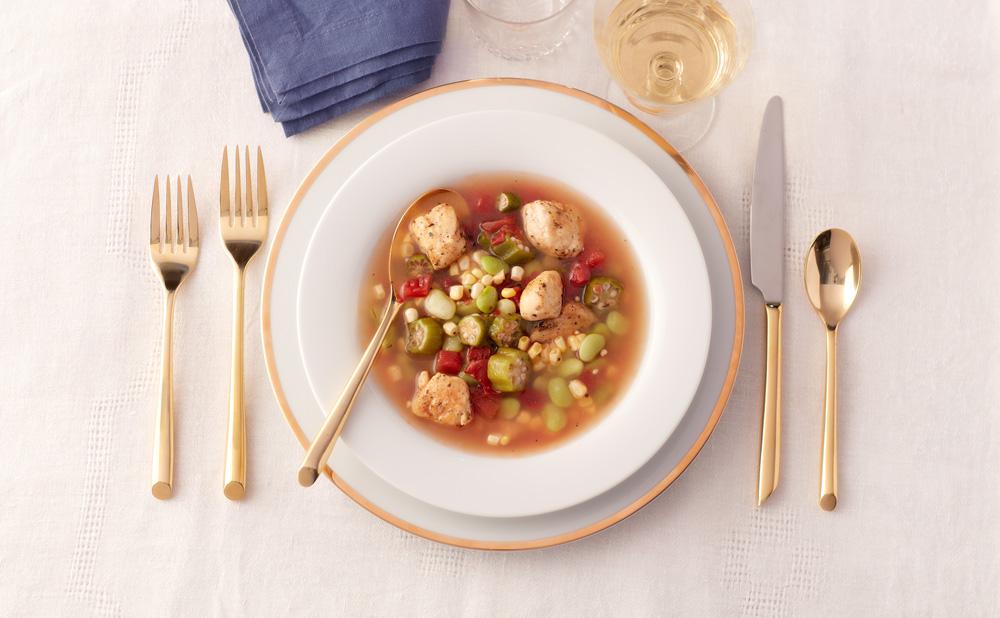
One of the recipes Martha Washington recorded is a light, flavorful vegetable and chicken soup that she attributes to Dolley Madison, the wife of the fourth U.S. president, James Madison. If you’re new to okra, Southern Chicken Okra Soup is a great way to try it in combination with other healthy ingredients such as tomatoes, corn and lima or butter beans. You can find both the corn and okra (already sliced) in the frozen food section of your local grocery.

Did Dolley Madison ever serve her okra soup at the many banquets and social events she held in Washington, D.C.? That part of the story is unknown, but why not? It’s suitable for a fancy feast or a quiet weeknight dinner and is delicious anytime.

Who liked what?
History is full of presidential fun facts, including favorite foods. Take the famous foursome of George Washington, Thomas Jefferson, Teddy Roosevelt and Abraham Lincoln. Who ate an apple almost every day? Who loved onions? Who ate an entire chicken in one sitting? And who helped popularize macaroni and cheese in America?

Here are some hints. Washington was a man of many layers. Jefferson lived in Paris for five years and returned with many new favorite foods. Lincoln, of course, was a country boy. And Teddy? He was noted for his excellent appetite. Look under the sketch above for the answers.

Decisions, decisions.
The big decisions presidents make get the most attention, but they — like everyone — ultimately make the decision of what they’re going to eat. Day after day, these small but important executive decisions can add up to healthier living and more delicious meals.

Legendary Goulash

When night falls, arise to satisfy your hunger.

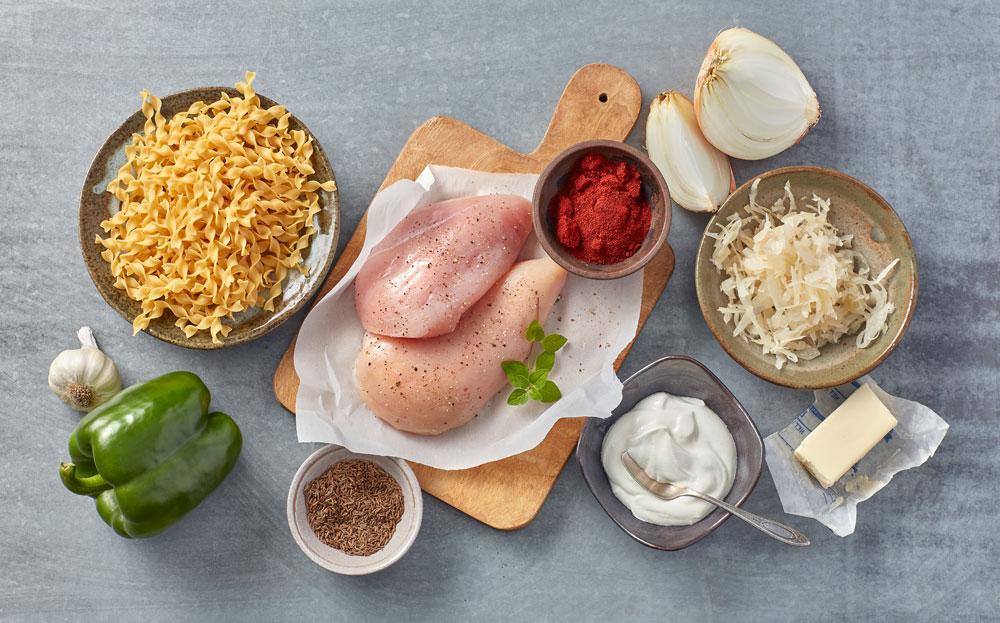
Is your sixth sense on red alert? Ah, that would be the paprika whispering quietly in your ear. In the most mild of undertones, it’s murmuring, “Come now, traveler. Just a nibble.”

Indeed, many newcomers to the border region of Hungary and Romania — where historically, the Principality of Transylvania was located — have fallen under the spell of the area’s magic. And with good reason. The flavors are, shall we say, irresistible.

Castle keepers.

This recipe is inspired by the long history and many cultural influences of the region. Goulash — a stew or soup originally made by herdsmen in a kettle over an open fire — is one of Hungary’s best-known dishes, and it’s also found in Romania.

Local color.

Goulash traces its history back nearly 1,000 years, but the addition of paprika to the stew didn’t happen until several hundred years later when chile peppers reached Europe. At first, chiles were more popular as decorative houseplants, and it took a while for the peppers to be used in cooking and ground into a dried spice.

Today, paprika is the national spice of Hungary and plays a major role in the region’s cooking. Goulash wouldn’t be goulash without paprika, nor would another famous dish in the area, chicken paprikash. The earliest chile peppers in Hungary were hot, but sweeter varieties were later cultivated and are the main source for contemporary Hungarian paprika. You get the savory essence of chile peppers without the heat of other varieties such as habanero or serrano.

Garlic included, just in case.

How many spices can brag about being mentioned in one of the best-known books of all time? When Bram Stoker published his novel Dracula in 1897, he sprinkled in details to intrigue his readers about the mysterious land of Transylvania. The narrator at the beginning of the book, Jonathon Harker, specifically mentions two meals made with paprika and describes having a dinner of paprika hendl (most likely chicken paprikash) in the town of Klausenburgh, now known as Cluj-Napoca, Romania.

Afterwards, he didn’t sleep well because he had bad dreams. He states, “There was a dog howling all night under my window, which may have had something to do with it; or it may have been the paprika.” But it couldn’t have been the paprika because in the morning the narrator gets up and has another paprika dish for breakfast. It was definitely the howling dog, an eerie foreshadowing.

Hot Stuff

Is it hot in here, or is it chile peppers?

When you’re hot you’re hot, and chile peppers are rarely shy about calling attention to themselves. Beloved worldwide and considered an essential ingredient in favorite dishes of all kinds, chile peppers are the go-to vegetable anytime you want to turn up the heat. But wait. Chile peppers aren’t vegetables at all. They’re fruit. And that’s just the start.

Fired up for healthy meals.

Chile peppers belong to the nightshade family, Solanacea, the same family that includes tomatoes, eggplants and potatoes. The specific grouping in this case, however, is the genus Capsicum, and the compound in chile peppers that makes them hot is called capsaicin. Medical researchers are finding more and more benefits of capsaicin, even indications that it supports better heart health. Peppers, both hot and sweet varieties, also boast high levels of vitamins and minerals.

Mild to manic and all points in between.

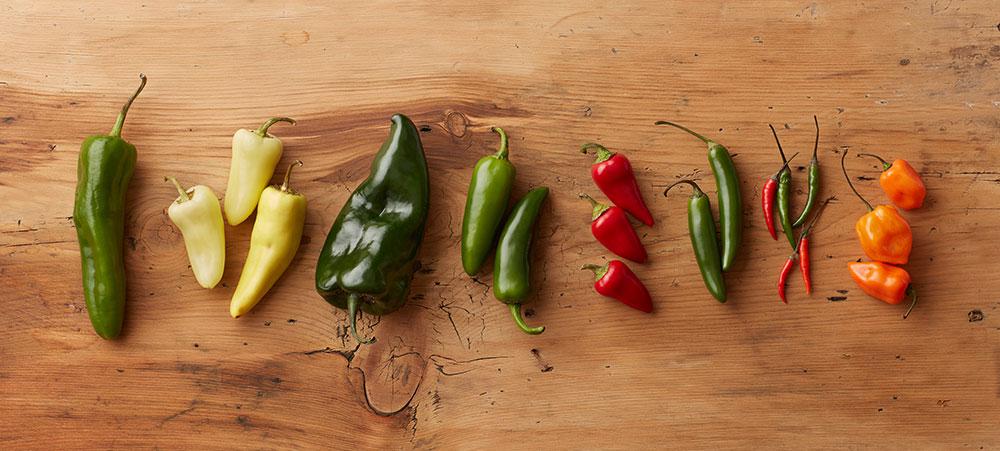
Your choices are nearly endless with as many as 3000 varieties grown internationally, but a few commonly found chile peppers include the ones shown here. From left to right: Anaheim, güero, poblano, jalapeño, Fresno, serrano, chile de árbol and habanero. Many have nicknames or names from other regions (the güero is also called Caribe, cera wax chile or huchiango), but if you’re shopping for fresh chile peppers and aren’t quite sure what they are, a general rule of thumb is smaller peppers are often hotter.

When you’re at the grocery or farmers market, the best quality peppers will have shiny, unwrinkled skins.

Handling the heat.

The oils of a chile pepper carry the heat, and it takes soap and warm water to effectively clean your hands after working with peppers. For handling very hot peppers such as habaneros, which are among the hottest in the world, some people often wear gloves. And if you’ve ever thought, there has to be a better way to slice and chop peppers, try this method. Keep slicing from the sides, and you’ll leave the stem and core intact for disposal or composting.

Be mine.

Chile peppers transform the ordinary into the amazing. Whether a casual meal or a special occasion, chile peppers chase away winter chills and turn up the heat. Cupid, meet Capsicum. Some things are meant to be.

Hot Chicken Rekindled

Hot enough for you? Dial it in.

Hot chicken has seared its way into national culinary consciousness in a big way. With a legendary heritage in Nashville, this firebrand of the fried chicken world blazes a new trail for creativity in the kitchen. Can the innovation continue? You bet your cayenne it can. And you can fine-tune the flavor you want with a lighter, healthier version that’s every bit as crispy.

Stoking the sizzle, crafting the crunch.

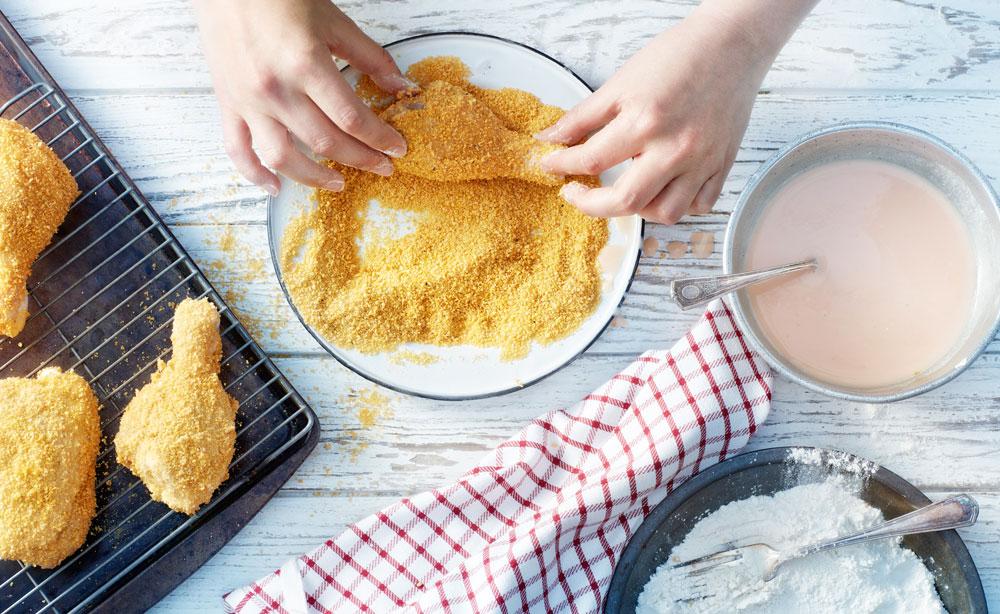
At first glance, hot chicken might seem obvious. Add lots of pepper, then fry the chicken. In fact, however, the ingredients, preparation and cooking technique all play important roles in creating the signature taste. Tangy buttermilk, vinegar-based hot sauce, corn flake crumbs, oven racks — this new take on oven-fried hot chicken keeps it crispy on the outside and moist on the inside with the bold flavors hot chicken is famous for.

Thanks, capsaicin.

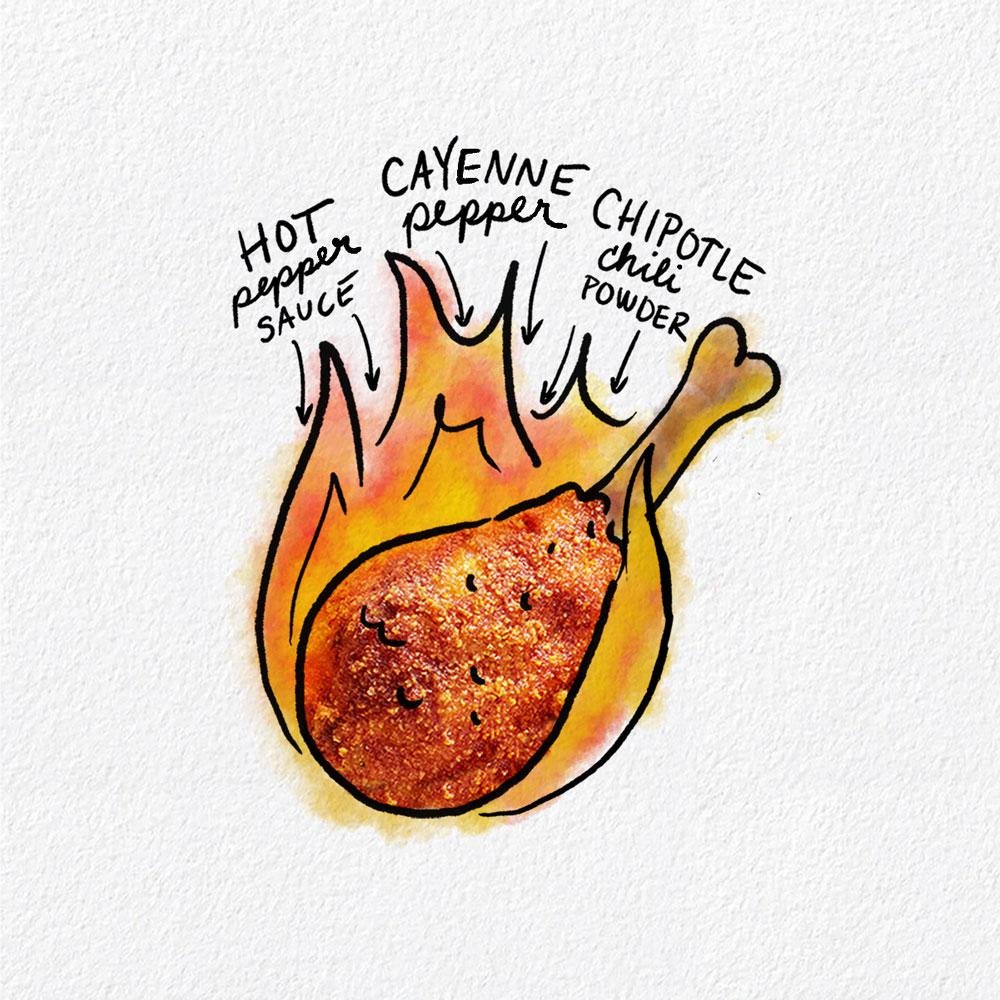
Every story has a hero, and the star in the tale of hot chicken is undoubtedly capsaicin, the compound in chile peppers that makes them hot. The recipe calls for three kinds of chile ingredients. The first is Tabasco or a southern-style vinegar-based hot sauce. The other two peppers are ground cayenne and chipotle. Sharing the spotlight are hints of brown sugar, roasted garlic powder and buttermilk. It’s the combination of flavors — some in the breading, some in the sauce — that work together to make this recipe unique. And if you’d like your hot chicken to be well, not so hot, that’s easy. Brush on less sauce at the end. You control the thermostat for this hot chicken.

More hot ideas: the essential sides.

A five alarm feast calls for the right sides to complete the experience. White bread and pickles are standard fare in Nashville, and you’ll also want a pitcher (or two) of iced tea to help your dinner companions keep their cool.

For the perfect slaw, try making your own blend of shredded red cabbage and thinly sliced kale leaves. Add some sliced green onions and black-eyed peas. Then whisk together olive oil, cider vinegar, dried oregano, celery seed, coarse salt and freshly ground pepper for an easy vinaigrette. If that’s not tangy enough, add a squeeze of lemon juice. Dress the slaw a little before you serve it so the cabbage and kale relax.

Grilling confidential

Sunshine, fresh air and fragrant smoke.

There’s nothing better than firing up the grill once temperatures climb. Burgers, ribs and hot dogs are American standards, but lean chicken is a happy partner in this annual celebration of al fresco dining, offering a lighter alternative to conventional grill fare. And with increasingly easy access to locally grown produce, it’s a snap to boost the veggie quotient in your summer menus. Here are some savvy ways to boost your grilling IQ. It’s just a short stroll to the patio to master the art of safe, healthy and pleasurable outdoor suppers.

Fail-safe grilling techniques.

Grilling has developed a bit of a reputation with new research about carcinogens forming from meat fat dripping into flames. But you can minimize your risk and enjoy grilled foods by taking a few extra steps before the coals are glowing (or you turn on the gas). 

Marinate for protection and flavor: Studies show that marinating meat before popping it on the grill not only bumps up the flavor but also reduces carcinogens, possibly because the marinade creates a barrier between the meat’s protein and the heat of the grill. 

A good basic marinade ratio is one part acid (vinegar, citrus juice or yogurt), one part oil and one to two parts aromatics (finely chopped garlic or onion, for instance). Then add salt or soy sauce and herbs, spices and sugar to taste. Chicken needs as little as an hour steeping in the refrigerator or can be prepped well ahead of time. Be sure to reserve some of the fresh marinade separately to brush on after cooking. 

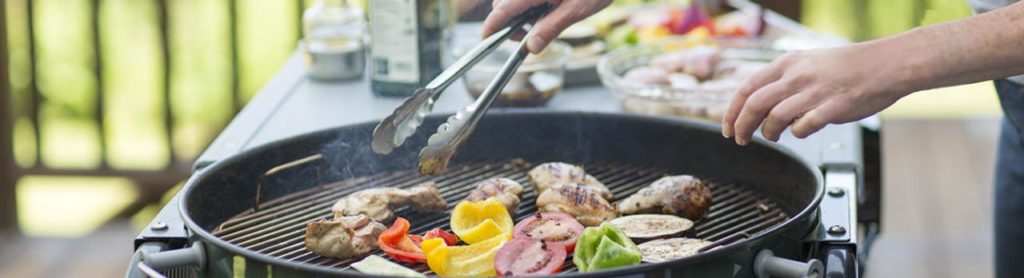
Grill just till done: Boneless chicken breasts and thighs, and bone-in pieces are perfectly portioned for direct heat grilling. The key to success is using an instant-read thermometer and paying close attention as the meat sizzles away. Cooking to exact doneness is healthier and keeps the meat moist. For meltingly tender chicken, especially a halved or butterflied whole bird, use indirect heat. This technique essentially turns the grill into a patio oven, cooking chicken covered and away from direct heat might take a little longer, but it eliminates the chances of splattering fat igniting flames from below.

Avoid flare-ups and charring: A spray bottle of water should be part of your outdoor kitchen, at the ready to douse unruly flames. It helps reduce too much blackening on the meat and keeps strong clouds of smoke at a minimum. 

Scrub the grill grates: Keep a wire grill brush close by and scrape burned bits of food from the grates before and after cooking.

Be a stickler about cleanliness: Always use a clean plate to transport freshly grilled foods to the table, stopping cross-contamination from uncooked meat in its tracks.

Sizzling better-for-you sides.

It’s possible to cook just about anything on the grill, opening up a world of healthy meals that keep you out of a steamy summer kitchen. Toss chunks of sweet bell peppers, thickly sliced eggplant or zucchini with a generous splash of fruity olive oil. A sprinkle of coarse salt and freshly ground pepper is all they need before joining the party on the grill. Char-grill corn-on-the cob or thick wedges of red onion, then chop them up into smoky relishes spiked with vinegar and honey to top burgers or juicy chicken pieces.

Lower heat around the grill edges are tailor-made for fruit like luscious pineapple or halved ripe peaches, which need only a short burst of heat to caramelize their natural sugars. Or grill-toast a grainy baguette, split lengthwise and slathered with garlic butter, to savor alongside a hearty chicken salad or a grilled ratatouille platter, topped with crumbled feta cheese, a few briny olives or capers and a squeeze of fresh lemon.

DIY seasoning blends: maximizing flavor.

Exotic blends of dry spices and herbs fill shelves in the seasoning aisle, providing instantaneous impact to anything you grill. But many commercial rubs are high in salt and sugar, which is fine in moderation but expensive for what you’re buying. It takes only minutes to roast up your own seasoning blends, hitting all the high notes of tastes you really like. Find a good source for bulk herbs and spices, so you can buy them in small quantities that you know are fresh. Take the time to lightly toast whole spices like cumin, mustard seed or coriander, and grind them in a mortar and pestle or a clean coffee mill.

Create your own secret recipe.

A nice coarse rub, generously applied, will form a savory crust on chicken that helps seal in flavor. If you’re grilling boneless chicken, drizzle the meat with a little oil before massaging on a rub. For skin-on pieces, like bone-in thighs, rub a bit of the seasoning under the skin as well as on top.

The possibilities are endless when planning a backyard repast, so embrace the season and broaden your vision of what’s good for the grill. 

Get Fired Up For Grilled Pizza

Take it outside.

Few foods have the universal appeal of pizza. The variations and combinations are endless, and the creative possibilities extend to cooking techniques as well. Who wants to heat up the kitchen on a beautiful summer afternoon or evening? That’s when you want to be outside, grilling with family and friends. Everyone loves pizza, and the same goes for grilling. Combining the two is pure pizza genius.

The right season for ratatouille.

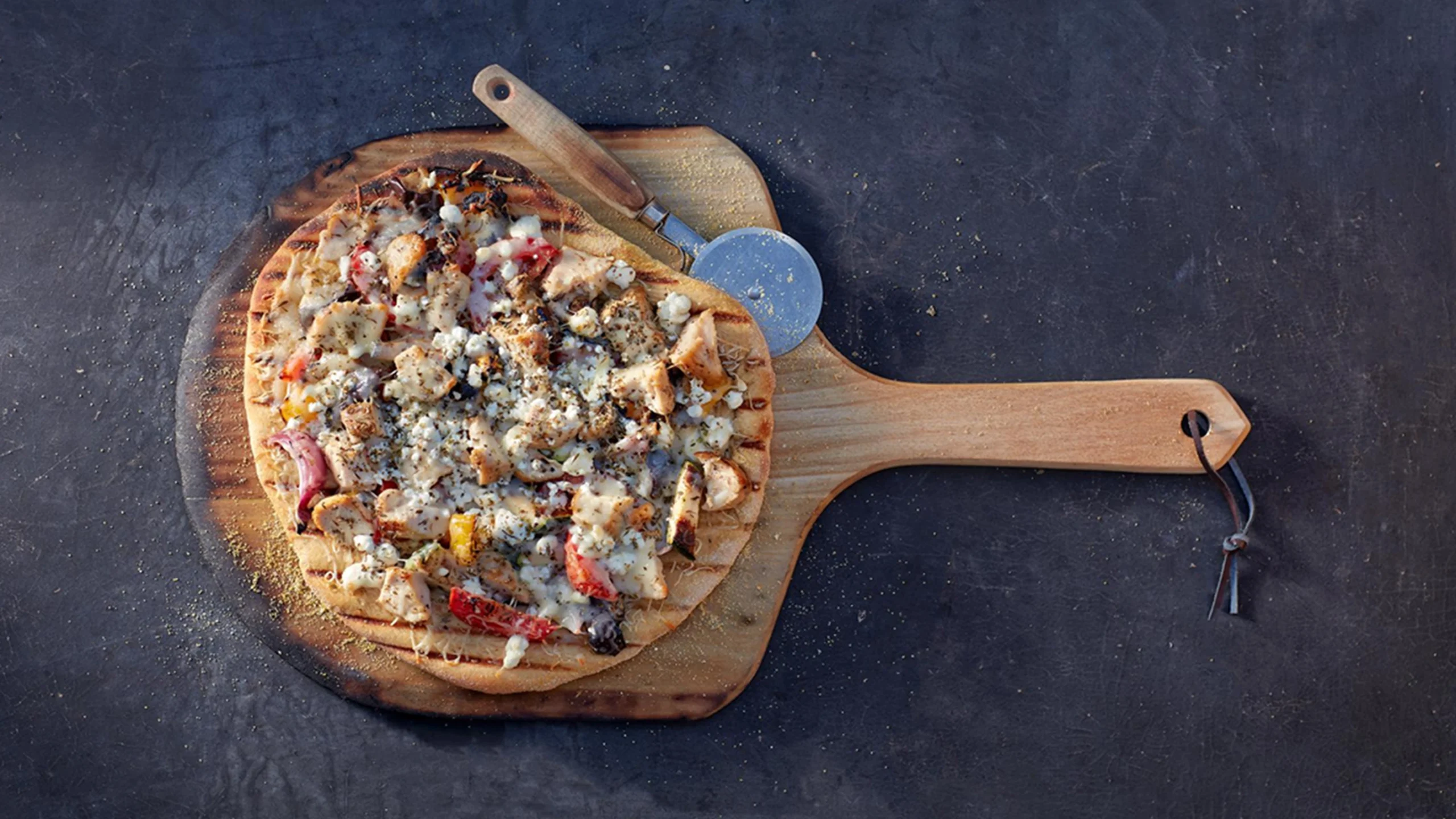
Ratatouille is an all-star veggie mix of onions, garlic, zucchini, tomatoes, eggplant and bell peppers. It’s also a great way to make use of fresh summer produce and pairs perfectly with the lean protein of boneless, skinless chicken breasts. Grill the chicken while you’re roasting the vegetables, and in just 10-15 minutes you’ll be ready to start building your own custom Grilled Ratatouille Chicken Pizzas.

Grill, flip, build.

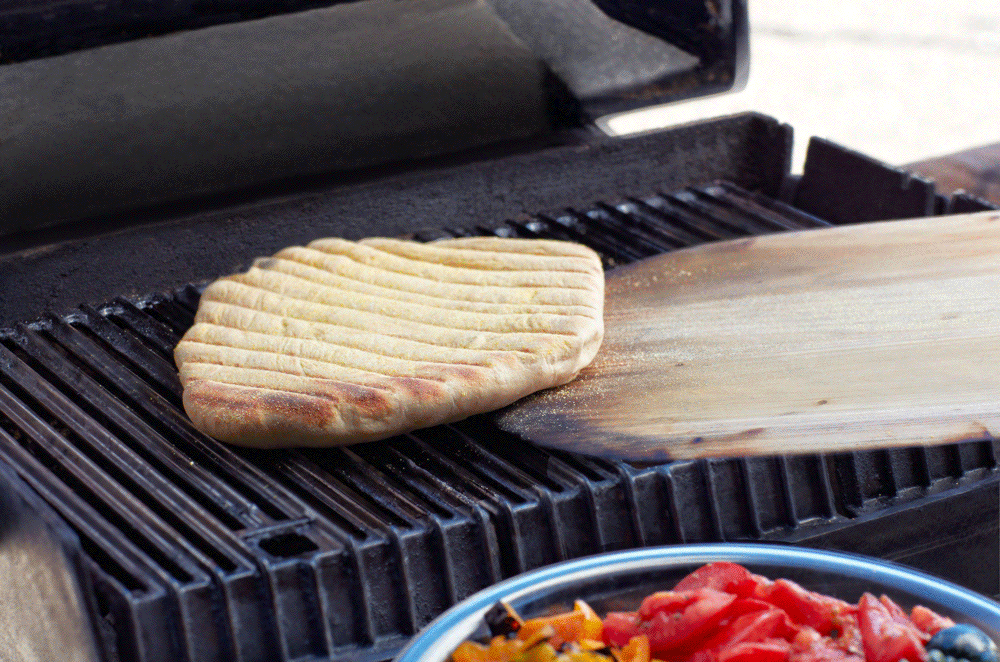
The single most important step in making a pizza on the grill is pre-cooking the crust on the side you’ll use to layer on the ingredients. All it takes is about four minutes until the crust is golden brown. When it’s ready, just flip it over and then start topping it evenly with the vegetables, chicken, cheese and herbs. That’s it. The veggies and chicken are already cooked, so the final step is melting the cheese and heating the crust until it’s completely done.

Round, square, big, small.

Who says pizzas have to be round? If your grill is rectangular, try rectangular or square pizzas. Or roll out smaller personal pizzas so people can choose their own ingredients. And note, you don’t have to make the pizza dough from scratch. There’s ready-to-bake pizza dough in the refrigerated section of your grocery store, frozen bread dough options and possibly even fresh from a local baker.

How can you top pizza as usual? Get fired up for Grilled Ratatouille Chicken Pizza, and enjoy all-new flavors and possibilities.

Flavor Stuffed

Chicken to the power of infinity.

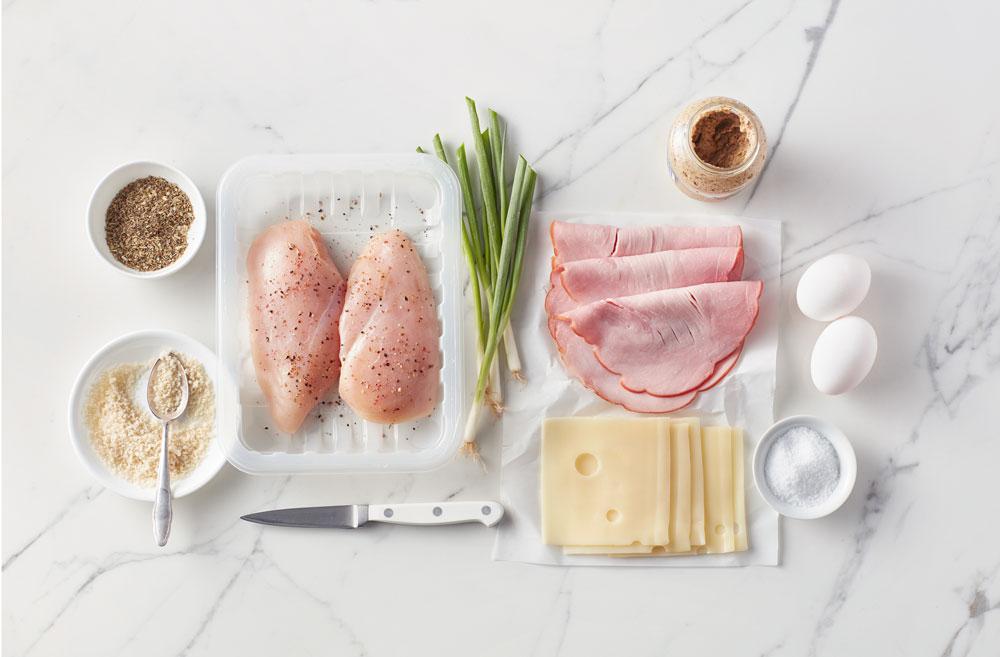
Mathematically speaking, simple addition doesn’t accurately describe what happens when you combine the ingredients for Chicken Cordon Bleu. True, it’s based on a technique that rolls up chicken, ham, cheese, condiments and herbs or spices. But when everything comes together, the resulting flavor is exponentially greater than any of the original ingredients. And isn’t that yet another reason to love this go-to lean protein? Just Bare Chicken is not only delicious and nutritious. It’s a versatile and creative starting point for dinner tonight.

Ready, set, stuff.

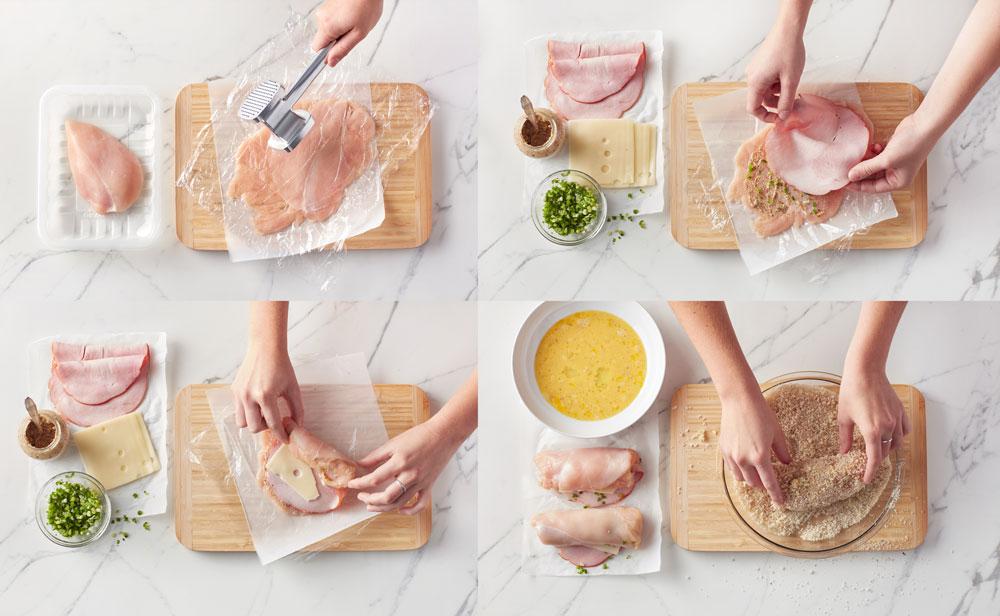
When your ingredients are ready, it’s decision time. One option for combining great tasting ingredients with chicken breasts is to slice horizontally into the thickest part of the meat and make a pocket. Once the pocket is formed (try not to cut through the meat completely), stuff the ingredients inside and sauté the breasts on the stovetop or roast in the oven. Another option, however, is the technique you’ll use for Millennial Chicken Cordon Bleu.

Ready to roll?

There are several advantages to flattening chicken breasts. For starters, meat of equal thickness cooks evenly. But if you go a little farther, carefully using a rolling pin or the flat side of a meat mallet, you can get the chicken to the point where it’s thin enough to wrap up other ingredients. Once you’ve rolled everything together, you can use a toothpick or kitchen twine for more control while the Millennial Chicken Cordon Bleu is cooking. Dipping each roll in an egg wash is great way to add seasoned bread crumbs or panko for a crispy contrast to the melted cheese on the inside.

Adding your touch to the tradition.

Chicken Cordon Bleu originated in America in 1950s and 1960s, but it traces its heritage to roulades or rolled meat dishes found in Europe such as Chicken Kiev. There’s no definitive way to make it. Create you own favorite new combinations by substituting prosciutto, serrano or bacon for deli ham. Swiss cheese is always a popular choice, but Gruyere or Parmesan are delicious as well. And for an additional flavor boost, try Chicken Cordon Bleu with finely chopped mushrooms or shallots. Whatever you include, this is one recipe that locks in the flavor every time.

Eureka!

To the orchard — and beyond.

According to legend, Sir Isaac Newton experienced his famous flash of insight under an apple tree. But an issue he never resolved and a timely one today is nearly as profound as gravity itself. With the change of seasons and thousands of families headed to local orchards, the question is, what do you do with all those apples?

Apples, after all, are everywhere and universally loved. There are more than 7,000 different kinds of apples worldwide, and in America apples grow in all 50 states. Antioxidants. Fiber. Vitamin C. There are plenty of reasons to love apples and find new ways to enjoy this delicious, versatile hallmark of autumn.

Easy as pie, yet so much more.

“New” is the important part. The bushel basket that looks so modest in the great outdoors can suddenly seem to double in size when it’s in the kitchen. Pies, torts and strudels are traditional go-to recipes, but that’s just the start. Apples and cider can play an important role in savory dishes too, even main course entrées.

Savor the possibilities.

When you get to the orchard, the first step is to ask is which varieties are ready for harvest and what they’re best suited for. Examples include McIntosh, Royal Gala, Cortland or Empire, but check with the grower to see if the orchard has any heirloom or local favorites from your region. And back at home, try a melon baller to remove the seeds and save as much of your apples as possible.

Quality from quantity.

Some orchards offer discounted prices on fallen apples, and gathering apples on the ground is a perfect activity for younger children who might not be tall enough to reach higher tree branches. And if those apples have cosmetic blemishes or small bruises, no problem. They’re ideal for apple butter, which you can freeze and serve anytime as easy sides.

Apple lovers, your time is now. Pull on that plaid shirt and grab a basket. If a single apple can redefine science, what can an entire bushel do? Find out this fall.