Page 4 – Just Bare Foods
Love Just Bare ? Leave us a review!

Big on Squash

Beautiful outside and in.

First things first. Yes, squash is actually classified as a fruit since it has seeds inside. But of course, everyone thinks of it as a vegetable, and that’s fine since, like all vegetables, squash is an excellent addition to everyday meals for its health and nutritional benefits. What’s more, there are hundreds of varieties of squash grown worldwide and probably a dozen delicious kinds at your nearest grocery store. The knock on winter squash might be, well, that tough exterior. But the beautiful colors and patterns do serve a purpose. They hint at the goodness within.

News flash: The seeds are edible too.

Summer squash and winter squash are in the same family of vining plants — Cucurbitaceae — along with gourds, pumpkins and even watermelons and cucumbers. The main difference between summer and winter squash is when they’re picked and how long they can be stored. Harvested at summer’s peak, summer squash have tender, edible skins and typically keep for just a couple weeks. Winter squash have much harder exteriors and are typically harvested in the fall. They’re an ideal veggie during the winter because they can last for months, though all squash taste better closer to harvest.

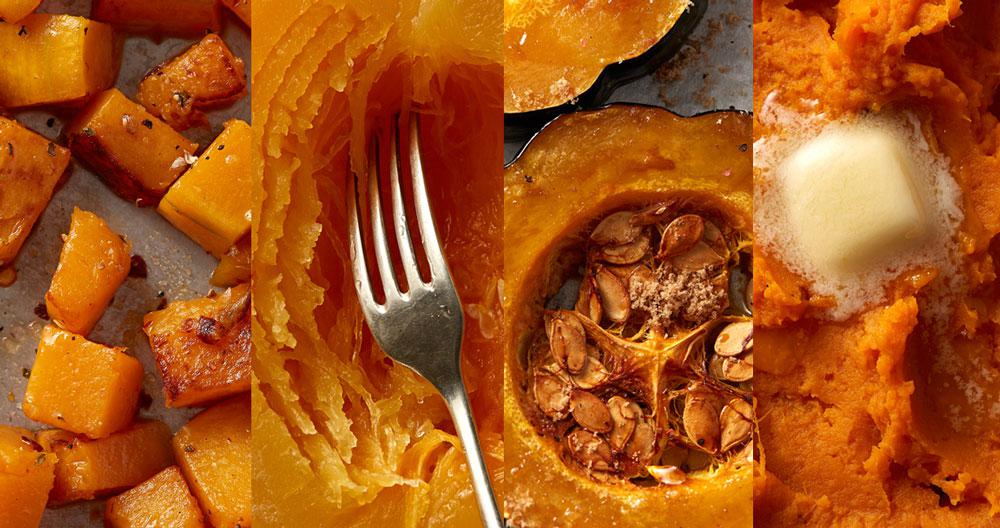
A good kitchen tool for cutting open a winter squash is a standard 8-inch chef’s knife, but any heavier knife or cleaver will work as long as it’s rigid and won’t bend. Once you’re inside, scoop out the pulp, save the seeds if you want a tasty snack (they’re delicious roasted in the oven with a little olive oil and salt) and get ready to cook the squash.

You can either heat the squash in the oven or microwave until it’s completely soft or just enough to make it easier to remove the exterior. Winter squash can be cubed, chunked, shredded, puréed or sliced, and different varieties have different textures and flavors, varying in their sugar, starch and water content.

Prized for good reason.

People have been planting and growing squash for thousands of years, and it’s one of the Three Sisters — corn, beans and squash — that traditionally sustained many native cultures in Central, South and North America.

Falling temperatures outside are the signal that winter squash season is here. Delicious, nutritious and always versatile, winter squash will keep you warm on the inside all winter long.

Ancient Agriculture

The essence of sustainability.

Living in Arizona as I became a serious cook made me very aware of our easy access to uniquely southwestern ingredients, everyday foods we took for granted. I lived just blocks from a pecan and date farm, my family backyard was filled with citrus and avocado trees, and my high school treks to the bus stop passed pomegranate trees that lined the road. But I also learned about the role traditional crops played in the local economy and regional styles of cooking, reflecting influences from Mexico and native peoples.

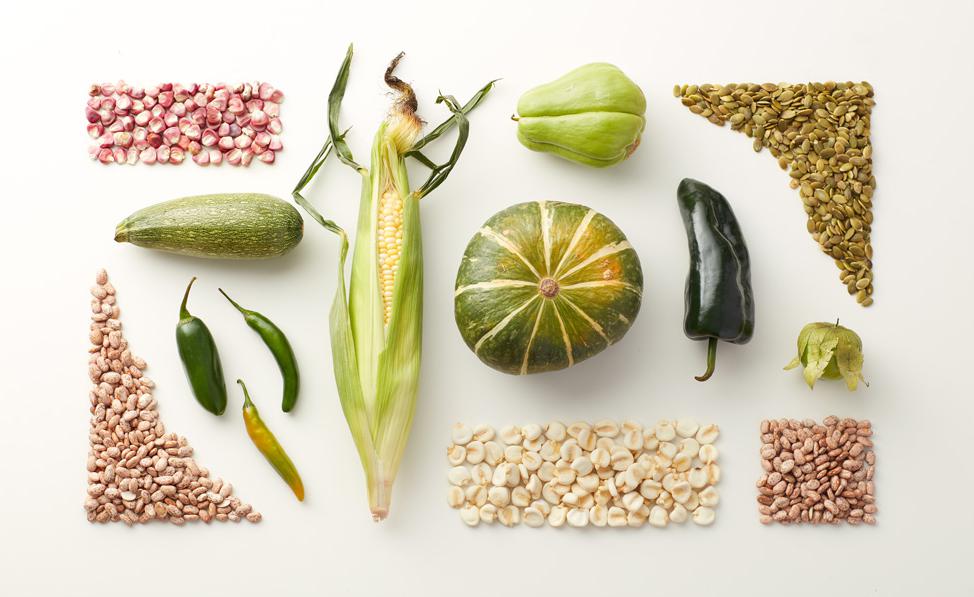
Careful and creative farming practices that stretch back into the haze of history still thrive today in the American desert southwest. Crops that are now commonly found around the world — corn, beans, squashes, hot chiles, tomatoes and more — migrated on the waves of New World exploration, but originated with native farmers.

Over centuries the dynamic system of milpa, the Mesoamerican system of rotating complementary food crops, along with medicine and fiber production, has sustained generations of indigenous families. What’s often called the Three Sisters — corn, beans and squash — is a simplified form of milpa which can include 12 to 20 annual plants that grow in a mutually beneficial way and help retain nutrients in the soil.

The remarkable aspect of these growing methods is how they consistently succeeded on such a harsh, arid landscape. An extreme climate with minimal rainfall, with periodic violent rainstorms that threatened to wash crops away, would not be anyone’s idea of a perfect gardening situation. Yet long ago farmers figured out how to make the most of what they had, developing some of the best examples of truly sustainable agriculture.

Original foods of the desert.

The milpa farming cycle is much harder to maintain in this era of large scale agriculture. But southwestern farmers who have access to enough land still try to maintain milpa methods in addition to growing other cash crops and hay for livestock. But beyond corn, squashes (from pumpkins to zucchini and chayote) and beans, many other plants were cultivated by pre-Columbian farmers. Varieties include hot chiles, potatoes, sunflowers (for seeds), tomatoes, tomatillos, avocado, jicama, nopales (from the prickly pear cactus), cassava (or manioc, the source of tapioca) and herbs such as epazote.

A master sauce.

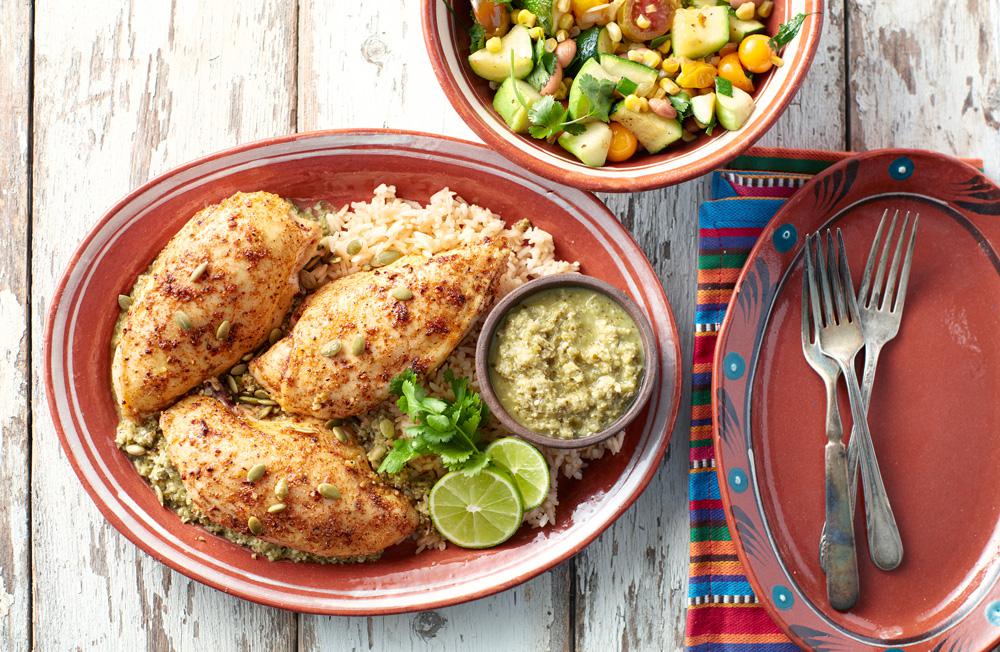
A classic sauce made from hulled pumpkin seeds, fresh tomatillos, hot chiles and leafy cilantro is a choice way to use every bit of the summer and fall harvests. Making its way from central Mexico, it’s a cousin in the popular family of moles, a term that originates from a Nahuatl or Aztec word for sauce. The word salsa also means sauce in Spanish, so whatever you call it, it’s all about buzzing up a luscious condiment for roasted or grilled poultry or meat. In New Mexico, a pipian sauce is often served with wild turkey, but here we’re making a saucy platter of bone-in chicken breasts ready-made for a celebration or Sunday supper.

The key to deepening flavor is toasting the pumpkin seeds (pepitas) well and seeking out the ripest tomatillos. Look for a brilliant limey green color when you peek through their papery husks. It’s best to use smaller ones that tend to have a more tangy-sweet taste.

A healthy spirit in traditional food ways.

So what’s the relevant takeaway from learning about these very old growing methods? Consider the explosion of community gardens. Their renewed emphasis on small, efficiently laid out plots, rainwater recycling, food waste composting and the support and sharing of the abundance of locally grown food all harken back to a time of communal food ways. When farmers are successful so is the entire community. It’s an age-old story of the value of keeping our roots deep in the earth and our fingers in the soil.

American Classic

History repeating itself, one delicious meal at a time.

Was there ever a time chicken pot pies didn’t exist? Food historians trace meat pies with poultry to the Roman era, and in America the dish appears in cookbooks in the early 1800s. Even Laura Ingalls Wilder mentions chicken pies in the Little House on the Prairie book series.

Clearly, some ideas have staying power, and when a meal is this versatile and satisfying, it’s likely chicken pot pies will be bringing warmth to wintry family dinners for another thousand years. With so many variations to enjoy — full-size, individual, casseroles topped with biscuits and dumplings — it’s time to dig in.

Easy as ___.

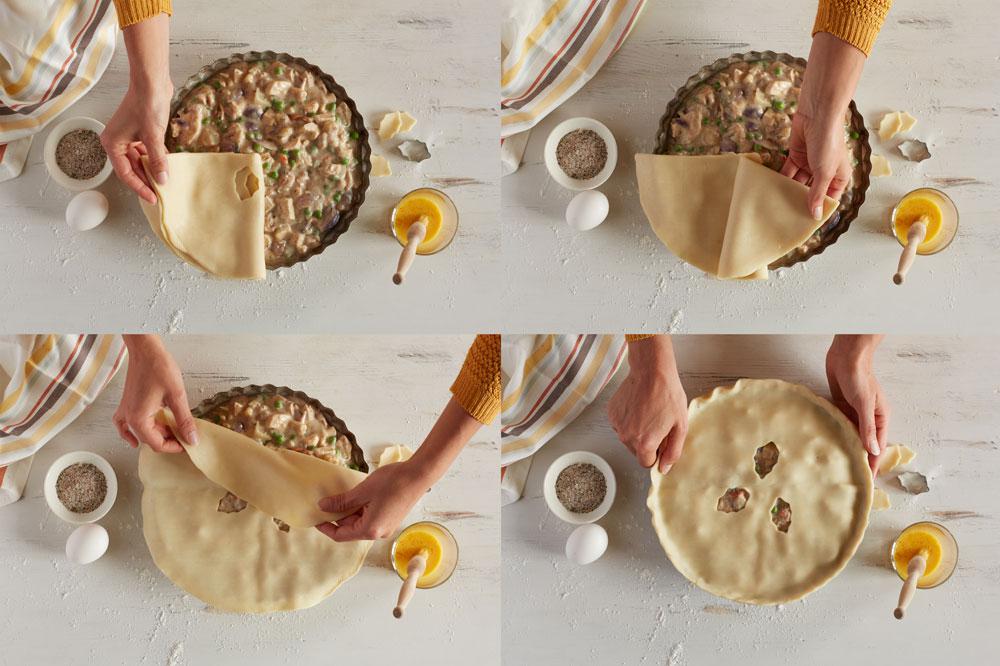
It’s true that sometimes a chicken pot pie can look like a remarkable feat of kitchen wizardry. But looks can be deceiving. The basics are simply chicken, vegetables, a cream sauce, seasonings and a crust. The chicken comes down to whatever’s most convenient — roasted leftovers, deli rotisserie, poached and more.

Seasonal veggies are always a good choice. Right now root vegetables are coming into their own, and you can vary the amount of chicken and vegetables depending on what’s handy. Make a crust if you like, but pre-made options definitely save time. Just check the refrigerated or frozen section of your grocery store to see what’s available.

Decisions, decisions.

With so many possibilities to choose from, where do you start? The baking dish might be a practical beginning — round or rectangular, smaller for single servings or bigger for a group feast. Family members can weigh in on ingredients for fillings. And the final choice is the best of all. Chicken pot pies can be served hot, frozen for later, reheated on busy weeknights or given as gifts. This is comfort food with a can-do attitude.

A Winter Blast of Sunshine

Snowbird-style escape.

No matter where a GPS finds your neighborhood, we’re deep in the heart of cooler (or downright frigid) weather. Many of us yearn to fly to warmer climes, playing snowbird. These are the lucky folks who spend their winter months in Arizona, Florida or Texas, living on the edges of citrus groves, avocado ranches or on streets lined with pomegranate trees. But even if you can’t escape, now is the time to gather up the best of what winter offers-sparkling fruits that can revive dreary days and sagging appetites. All are storehouses of restorative vitamins, minerals and other beneficial nutrients.

Tropical dreams.

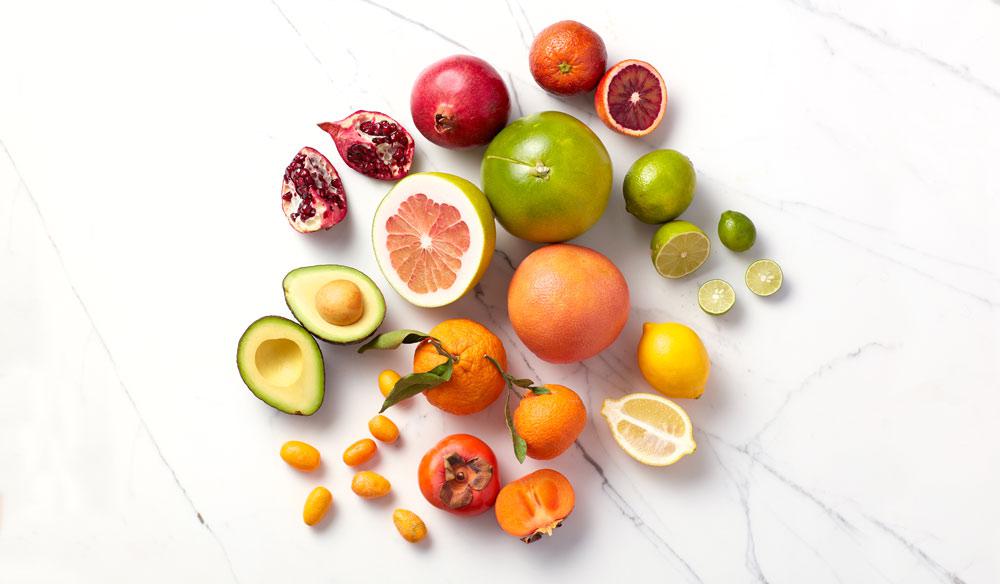
Many of the fruits that are abundant this time of year are at their harvest peak, bringing an aromatic whiff of far-away places. Citrus in particular, from tangy-sweet Meyer lemons to perfumy mandarin oranges, offers so much variety it’s easy to find a favorite. But beyond citrus, be on the lookout for succulent Fuyu persimmons with their brilliant orange skin; carambola (star fruit), a sure-fire hit sliced into a refreshing salad to serve alongside a glazed roast chicken; pomegranates, which are on the wane now but still can be found to spruce up salads; and the star of the toast world-avocadoes, which are botanically classified as a fruit. But don’t forget pineapple, papaya, and mangoes, which also hang around into the winter. Individually each winter fruit has a strong nutrition profile, from the obvious jolt of vitamin C in a single grapefruit or star fruit to significant boosts of vitamin A, folate, potassium, fiber (eat the whole fruit rather than just drink the juice) and healthy fats (avocados, of course). In cold and flu season, bypass the medicine chest and head straight to the fruit bowl.

Choose your technique wisely.

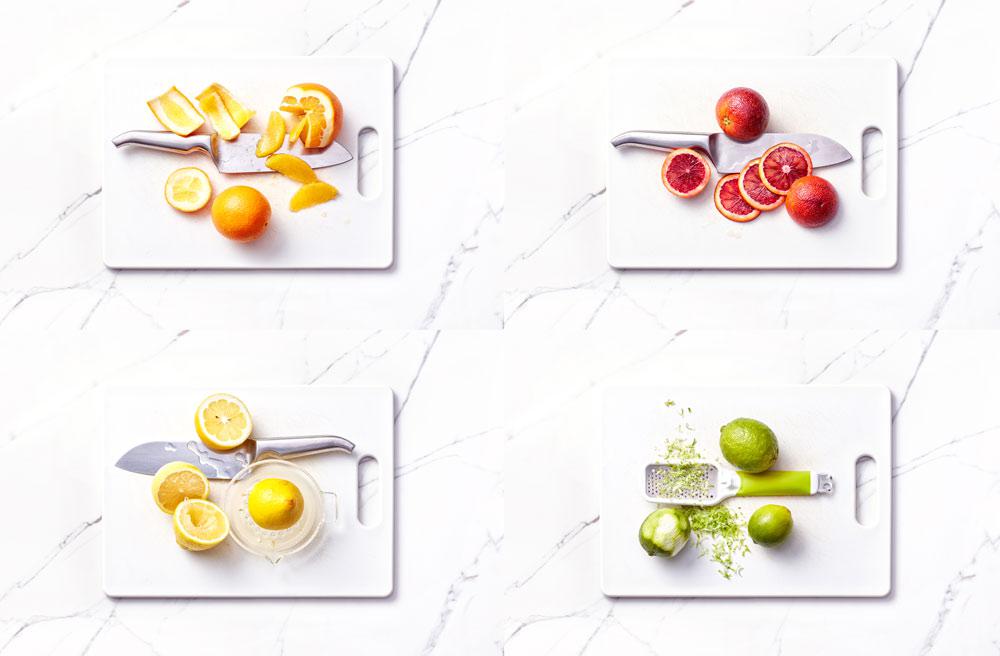
The vibrant tastes and visual beauty of winter fruits offer a huge splash of freshness to almost any dish, whether as a primary ingredient or as a final snap to contrast rich flavors. Depending on how they’re prepped in the kitchen you can add zestiness, sweetness or pucker-up tartness. Using citrus as an example, juicing a lime or pomelo yields mellow taste with a sweet edge, while grating the zest (just the colored part of the citrus peel where the essential flavor oils are) provides the deepest essence of citrusy flavor. Slicing a lemon gives you both aspects of the fruit. Or segment a juicy and jewel-like grapefruit or orange for a main dish salad. There’s nothing better than a platter of sliced ripe Hass avocado and segments of red Texas grapefruit arranged on a bed of crisp winter endive. Just top with sautéed chicken, and tie everything together with a creamy poppy seed dressing.

Turn on the heat.

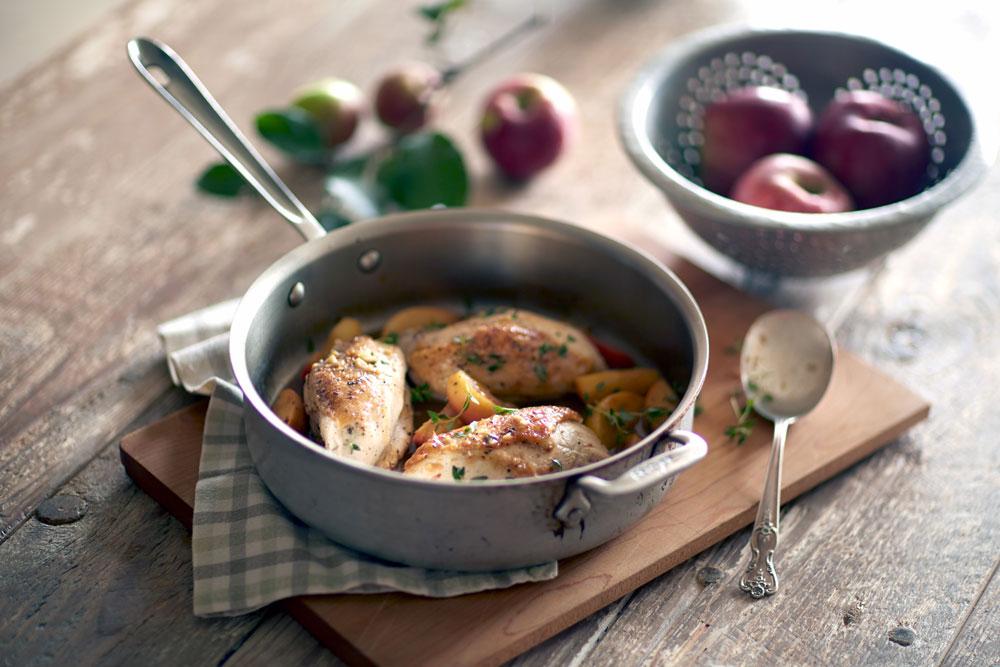
Winter fruits aren’t just for salads, though there’s no denying the cheeriness of lemon zest in a vinaigrette dressing or a sprinkle of pomegranate arils, which makes the most of their robust color and flavor in perking up cold-weather meals. But how about adding some heat? Consider chicken piccata, a classic recipe that melds the tartness of lemon, easy-going wine and briny capers to take chicken to a new place.

Another citrus option would be stuffing a whole chicken with small lemon halves and scattering a few more in a roasting pan. The juices released from both the lemons and the chicken mingle to create an extraordinary pan sauce with no extra effort. Also, ripe persimmons are luscious roasted with root vegetables and served around baked bone-in chicken pieces. Or avocados are amazing when halved and grilled on the stovetop or outside, then filled with a chicken salad dressed with a creamy lime dressing. Embrace winter!

What’s in your store? Name your citrus.

  • Lemons (regular, Meyer)
  • Limes (Persian, Key, finger, Kieffer)
  • Oranges (navel, Valencia)
  • Cara cara oranges (red inside like grapefruit)
  • Blood oranges Tangerines (Satsuma)
  • Mandarin oranges
  • Clementines
  • Kumquats
  • Pomelos (or pummelo)
  • Grapefruit (white and red)

A Do-Over for Leftovers

Holiday cooking, take 2.

Even though they’re a busy home cook’s best friend, leftovers don’t always get the love they deserve. Maybe it’s the word itself — leftovers. It can seem like déjà vu all over again. But here’s a newsflash. Leftovers can actually be the starting point for something entirely different. This holiday season, it’s time for leftovers to get a do-over.

Have we met before?

Here’s the scenario. Over the weekend you prepared an elaborate feast, and naturally there were leftovers. That’s good, in particular the chicken and sweet potatoes. Because in the twinkle of an eye, a little holiday magic comes into play. It’s like giving yourself a present — an easy, healthy weeknight meal that cooks in 15 minutes.

Need some other ideas? Leftover herbed bread stuffing, cooked veggies, chopped chicken and eggs are all you need to make a great skillet supper frittata. If wild rice stuffing and cranberry sauce or chutney are on hand, consider making cranberry glazed chicken with wild rice pilaf. The possibilities for creative new combinations are endless. From traditional favorites new traditions can emerge.

Going, going, gone.

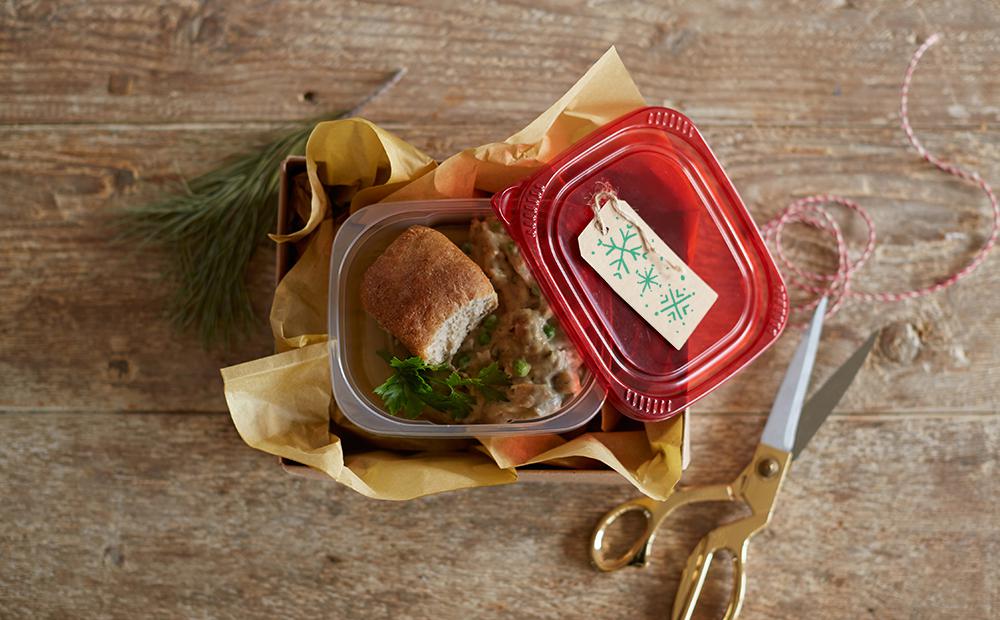
Another way to manage leftovers during the holiday season is to send them home with guests. It’s a tasty way to celebrate the festivities one more time. A little wrapping paper. Sparkly ribbon. Hand-written note. Suddenly, leftovers are transformed into a thoughtful expression of friendship, and the gift of food is one everyone can appreciate during the busiest time of the year.

Wait. How many people are coming?

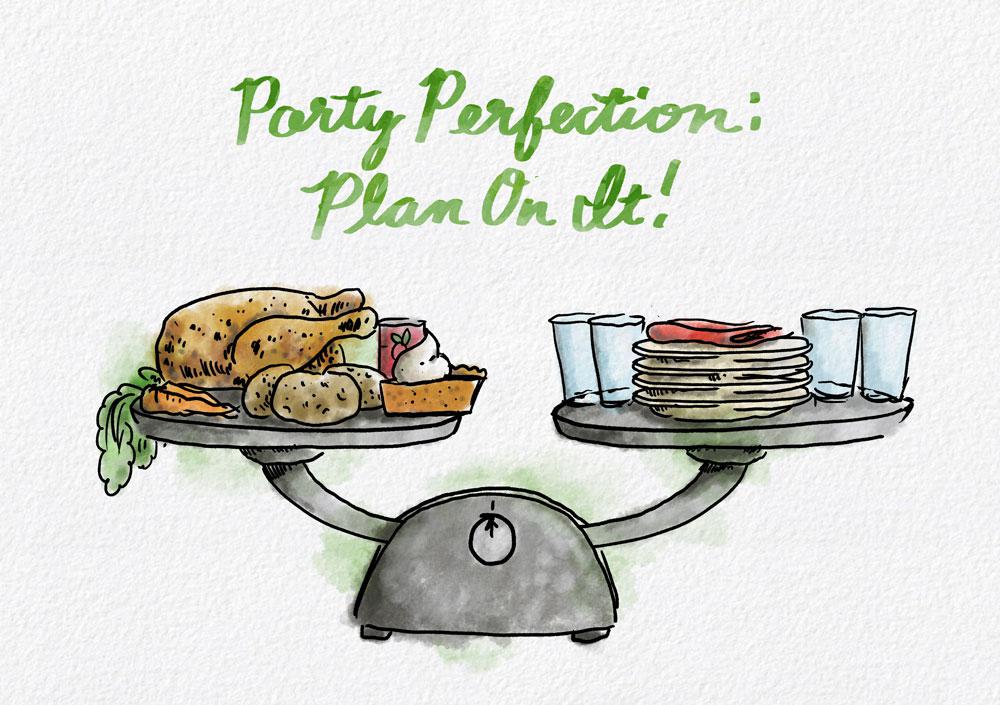
It’s a good problem to have when more friends or family want to join a holiday get-together. Scaling up, though, doesn’t necessary mean simply doubling, tripling or quadrupling recipes. If the plan is for everyone to bring appetizers, for instance, the main course could grow in more modest proportions. A variety of online resources can help with menu planning.

As the holiday season moves into high gear, think of leftovers as the gift that keeps on giving. Twice as nice. Full of joy. Simply delicious.

Cacciatore Creativity

Translating a classic.

Every few hundred years or so it’s a good idea to take a fresh look at a classic dish. An Italian-American favorite with roots in Italy going back centuries, chicken cacciatore is the perfect recipe to expand upon because variations have existed over time. In Italian, the word cacciatore means hunter, and it’s common to hear chicken cacciatore described as a hunter’s chicken stew. In Italy, though, the dish is more often known as pollo alla cacciatora, which actually means the hunter’s wife’s chicken stew. Whose dish is it, his or hers? It’s time to make it yours.

All the ingredients for a successful makeover.

The essence of chicken cacciatore is the combination of a lean meat, aromatic vegetables and savory mushrooms. Some early forms of chicken cacciatore don’t include tomatoes, which arrived in Italy in the 16th century as the result of explorations in the Americas and gradually became accepted as an edible food. But the version of chicken cacciatore popularized in Italian-American cooking in the 1950s usually features a red sauce, typically thick and heavy.

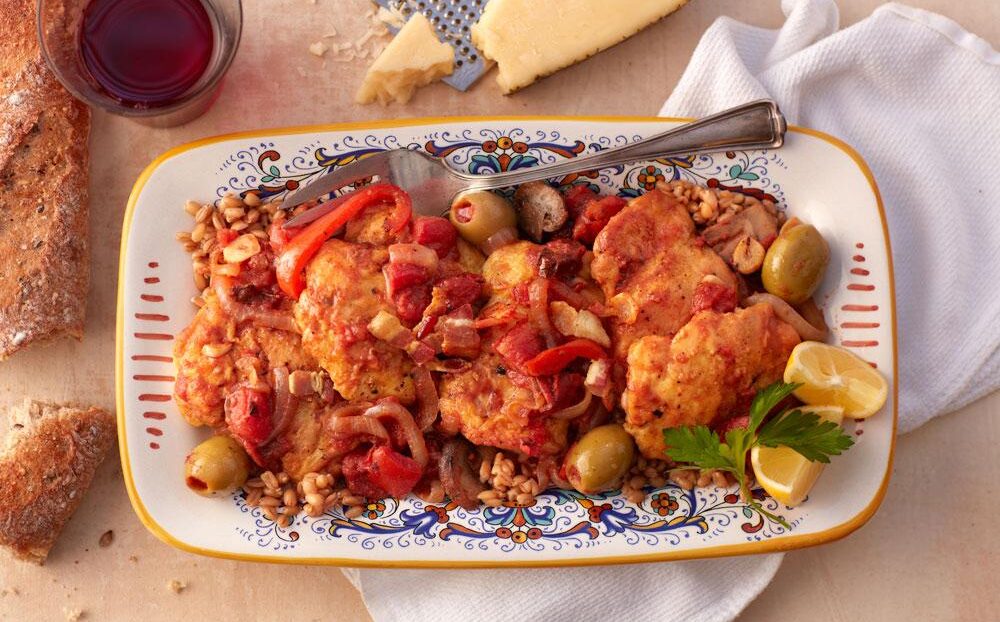
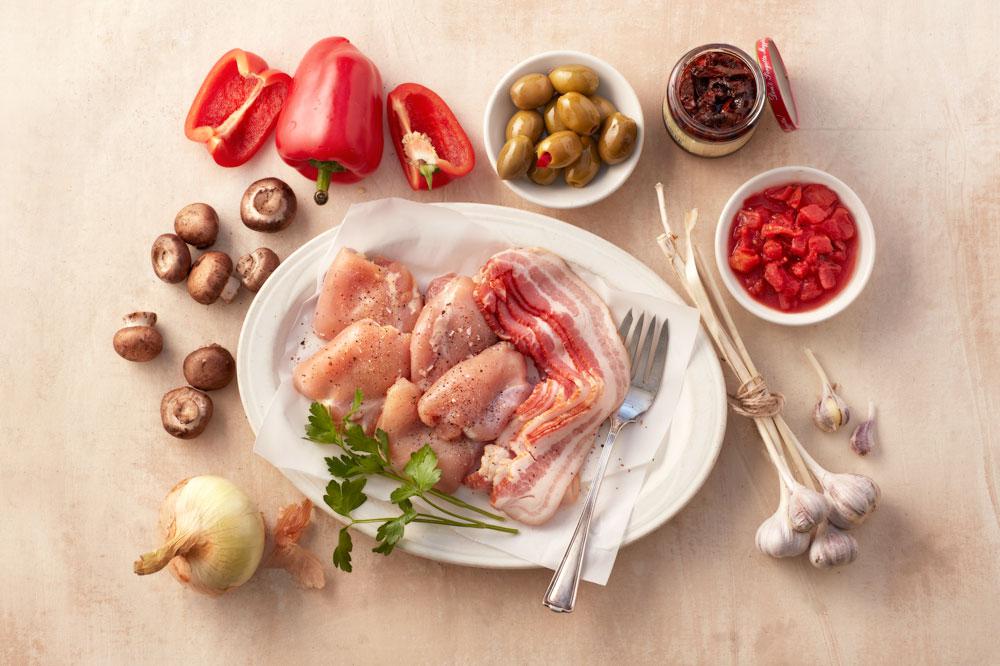
This new recipe for Refreshed Chicken Cacciatore calls for diced tomatoes plus sun-dried tomatoes. It also includes pimiento-stuffed olives for a sweet-and-salty bonus. Pre-cooking bacon or pancetta adds a depth of flavor to go along with the olive oil you’ll use to sauté the chicken thighs and veggies. It all comes together in the skillet for 15 minutes of braising, which in fact is the secret for why this recipe is so beloved.

In praise of the braise.

Though braising is similar to simmering in the sense there’s liquid and low heat, the two cooking techniques are different. With braising, you’re using just a small amount of liquid or sauce to finish cooking a main ingredient — usually meat — that’s already been sautéed and browned. When you’re simmering a stew, in contrast, all ingredients are completely submerged.

Braising can be a lengthy process, but it doesn’t have to be. Here, it’s just 15 minutes in a light sauce you create from red bell peppers, onions, mushrooms, diced tomatoes and white wine or chicken broth. The veggies stay crisp, and the chicken remains tender and moist.

Finish with farro.

Chicken cacciatore pairs perfectly with your favorite rustic bread or rice, but there’s an ideal option even older than the recipe itself and also associated with historic Italian cuisine. Serve your chicken cacciatore with farro, which looks and tastes like a light brown rice. It’s sometimes called emmer, and this high fiber whole grain contributes B vitamins, zinc, iron and protein.

If you’re on the hunt for a fresh new take on a classic recipe, try Refreshed Chicken Cacciatore. It’s yours to savor and enjoy, a healthy new variation that makes a great meal even better.

Back-to-school snacks

Snacking demystified.

Kids groan. Parents cheer. Teachers prepare. It’s back-to-school time, and once again that means fresh starts and new beginnings. Yes, it’s bittersweet with summer winding down and more details to attend to than minutes in the day. But here’s the good news. Managing snacks doesn’t need to be on your worry list. Just follow a few basic concepts to prepare and pack snacks that promote your child’s growth and development.

  • Think of snacks as part of the day’s meals. Grains and starches provide quick energy, proteins build bodies, and fruits and veggies protect from illness.
  • Ensure basic food safety, starting with washing hands and keeping cold foods cold.
  • Promote hydration for health. Tap water is hard to beat, and juicy foods contribute too.
  • Pack for healthy teeth. Sugars and simple starches break down quickly and feed oral bacteria that cause decay. In general, focus on proteins, nuts, fresh fruits and vegetables. Try to finish snacking with drinks of water and save sticky foods for times kids can brush their teeth.

Making the most of each bite.

Snacks are often small, quick bites, but ideally they’re filled with big nutrition. Let your child’s hunger guide the amount they eat. Your job as parent is to supply wholesome foods, and your child’s job is to let you know when they’ve eaten enough. Avoiding obesity means recognizing hunger and satiety cues. Help your child learn to rely on built-in cues for hunger and thirst. A 9-13-year old may need as many, or more calories than you do. On the other hand, times between growth spurts may make you wonder where children get all that energy when they’re hardly eating a thing.

The lettuce wrap is an example of a nutrient-dense snack. Carrots, lettuce and herbs provide 99 percent of the day’s vitamin A needs (healthy eyes) and 88 percent of vitamin K (those growing bones). The chicken provides 27 percent of the all-important niacin for maintaining a healthy nervous system. By composing the wrap, the child is learning to combine foods into a nutritious mini-meal.

Working together to promote family values.

It can be hard to find quality time together when everyone is busy. Why not multitask and make snack preparation a family activity? Working together lets parents hear about their kids’ activities while providing a moment to share environmental and food values. How long can cheese or nut butter stay at room temperature? Why does hummus need to be refrigerated? Learning food handling skills helps children become self-sufficient. And who knows? They may reward you by making lunch.

If you can find the time (and patience) to shop together, search for containers that fit the child’s interests. Think of orchestrating the production of transportable snacks as building healthy minds and bodies, all while making memories.

Snack Pairings.

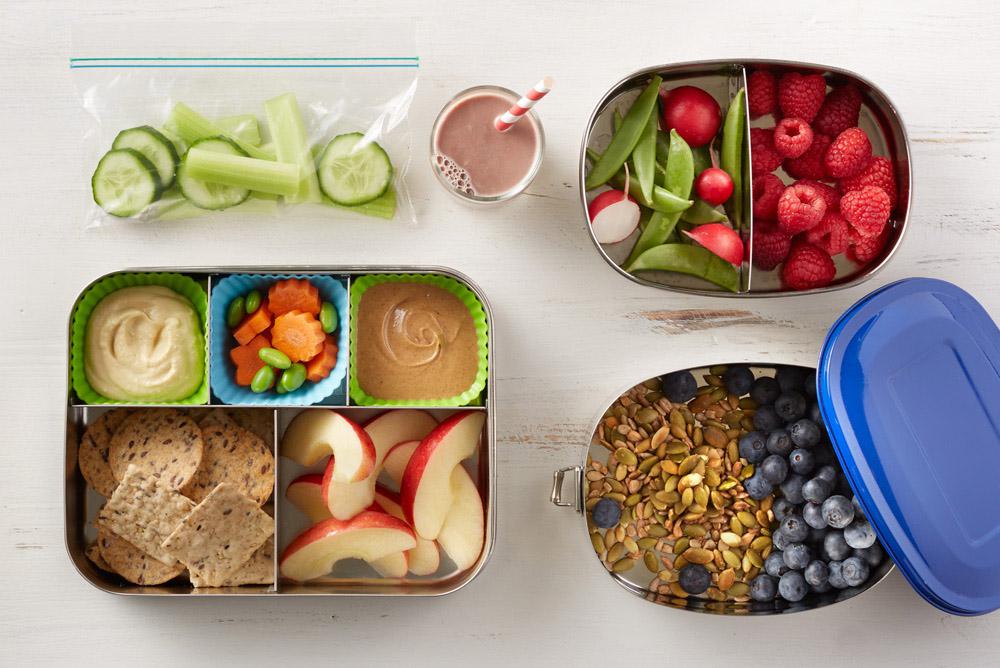
New school, new classrooms, new friends. If there’s ever a time for comfort food, it’s right now. The nutritionally balanced pairings listed in this chart are classic combinations (and aid in cavity prevention), but you and your family have a whole year to experiment and discover new favorites.

Perhaps your child wants to explore new flavors. Increase the likelihood that snacks are eaten by offering options. Let your child choose additional pairing criteria such as flavor and texture. Include dried berries and spiced nuts in the trail mix for sweet and spicy flavors. Balance the texture of crunchy cucumbers with creamy hummus or yogurt dip. Making choices helps children learn. Healthy snacks keep brains sharp and bodies strong to help students make the most of all the opportunities a new school year provides.

Summer in France

Celebrating the moment with family and friends.

It’s beautiful. Or as the locals would say, C’est beau! That’s the #1 reaction of visitors to France at the height of the growing season. Fresh produce abounds. Meals both simple and sublime surprise and delight. And for one of the nation’s most widely celebrated events, Bastille Day on July 14th, that’s a good time to keep things simple so there’s more time conversing instead of cooking. And why not enjoy the occasion outdoors? Let the festivities begin.

Not too thick, not too thin. Just right.

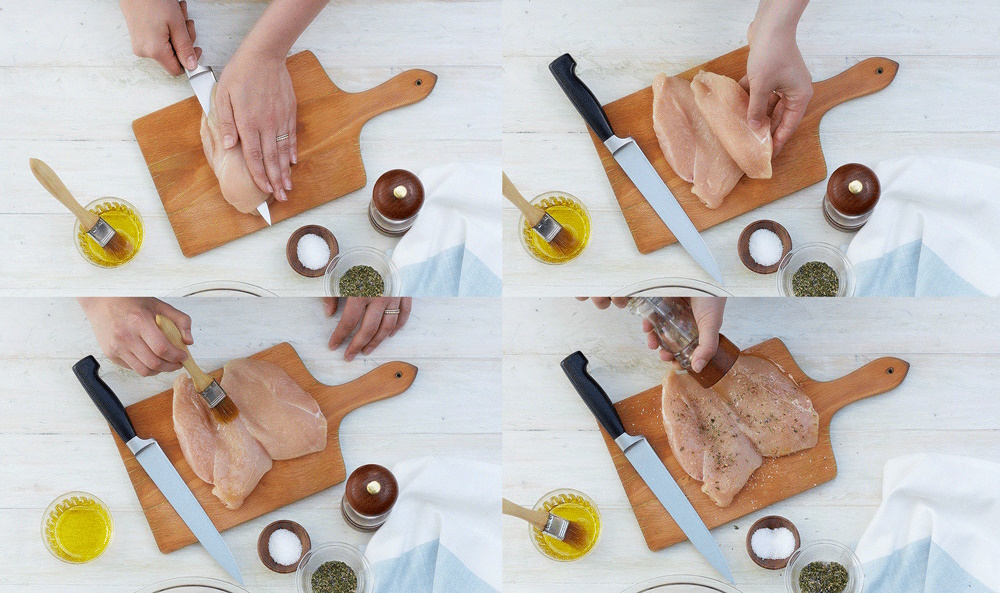
Based on the goal of simplicity, ease of preparation and maximum time outdoors, an easy option for grilling boneless, skinless chicken breasts is to turn them into paillards. The standard definition of a paillard is simply a thin piece of meat, often created by pounding. But you can also slice a chicken breast in half horizontally and get two cutlets of equal thickness for fast, even cooking. Brush on some olive oil, sprinkle with seasonings and you’re ready to grill.

From flame to feast.

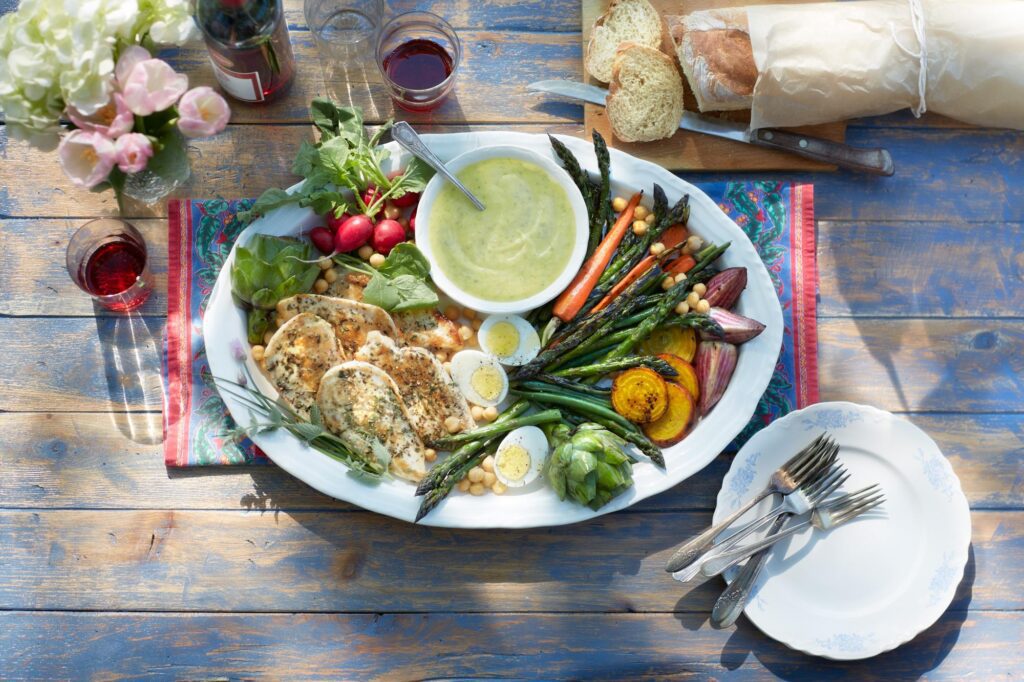
Grilling a chicken paillard takes about three minutes a side. It’s that quick. And while the grill is hot, veggies of all kinds can be quickly roasted. But what holds all this together? Is there a sauce that brings out the best of chicken, veggies and even bread? Yes. In French cooking, the answer is a Grand Aïoli, which is essentially a garlic mayonnaise made from egg yolks, olive oil, salt, herbs and lemon juice. You can make it in minutes in a mini chopper or blender, as you’ll see in the recipe for Grilled Chicken Paillards Le Grand Aïoli.

Vegetable & Chicken Tian de Soleil.

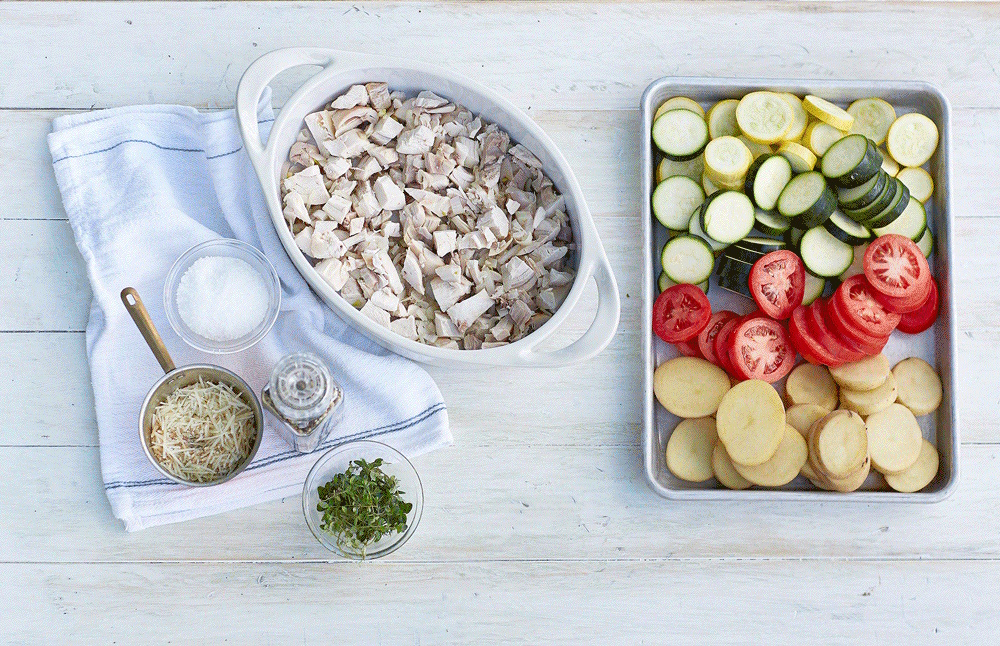
French cuisine has earned a reputation for quality over quantity. Select, well-sourced ingredients skillfully prepared and served in reasonable portion sizes set a good standard for any meal. A great way to use leftover chicken and abundant summer produce is Vegetable & Chicken Tian de Soleil. In southern France, a “tian” refers to an earthenware cooking pot and also a baked dish of chopped veggies topped with cheese. Slice the veggies, bake and serve.

To everyone gathered, bon appétit!

Your feast is dazzling. Not because it’s complicated or required hours of preparation. Save that for another day and season. The season of the sun is here — warm, welcoming and bright with smiles. Take a cue from the French, and let their approach to summer inspire your next get-together. Simplicity brings out the best of summer. Bon appétit!

Spring Awakenings

Local, fresh produce returns.

Patience may be a virtue, but that doesn’t mean it’s easy. Take winter, for example. It can test anyone’s patience and sometimes feels like it will never end. Yes, if you’re a gardener, there are seed catalogs to browse and plans to make. And in the kitchen, there’s always another nourishing, hearty stew to simmer and savor. But the arrival of spring is a true cause for celebration. A new growing season has arrived and with it comes fresh, local produce.

3, 2, 1 … grow!

The best news about gardening is you don’t need a lot of space to do it. Even apartment dwellers can use patios, balconies and windowsills. You can also start seeds indoors, and some veggies can be planted outdoors in temperatures as low as 35° F. Rest assured, your favorite farmers market growers will be ready when your local market re-opens outdoors for the summer because they started their growing season long ago in greenhouses. The biggest question is simply, what’s for dinner tonight?

The essence of the season.

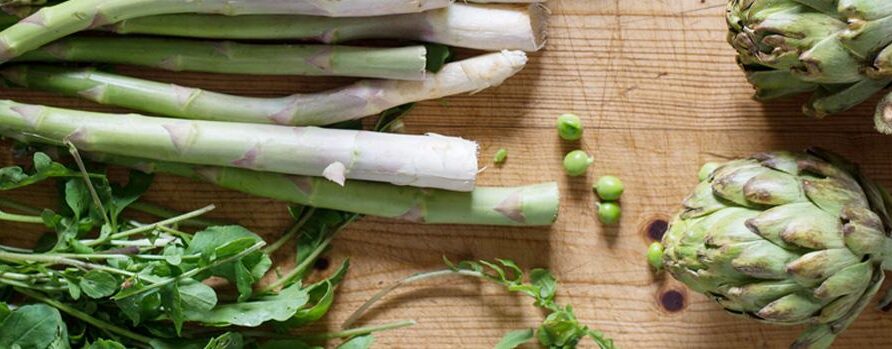
Many veggies are at their freshest and most tender in the spring. The Just Bare® Chicken website has an extensive recipe library, and here’s a preview of what you’ll find browsing the collection. Asparagus? Morel mushrooms? Kale? Yes, yes, yes and more. You’re sure to find what you’re looking for this spring and throughout the year.

Navigating the Holidays

How did November get here so quickly?

Conventional thinking suggests that a year has four seasons – spring, fall, summer and winter. The reality is a bit different. There’s actually a fifth season, the holiday season. It’s a force of nature too and calls for certain navigational strategies to make the most of this very special time of the year.

The holidays are, indeed, special. They’re full of festivities, celebrations and traditions. But mostly, they’re full of people — family, friends, coworkers, the neighbor next door and as hard as it might seem sometimes, you. Yes, you.

Dash away, dash away, dash away all!

As the calendar starts filling up with annual get-togethers and holiday parties, why not schedule something for yourself? In particular, something active you could do and invite family and friends to do too. Who’s up for a 5K walk over Thanksgiving? Or a 10K run to ring in the New Year? Getting ready could be just the ticket to keep the body moving throughout the holidays, and it could also help set the stage for a healthy 2023. Traveling during the holidays? Check online to find out what’s happening at your destination. And there are always regular walks in the neighborhood, touch football to burn off the most recent feast and longer hikes in nearby parks. For a lot of people, good cheer depends on staying active.

Healthy substitutions, Healthy Holidays

Something new for something old.

Another way to navigate the holidays is to get creative with healthy alternatives when you’re cooking. It’s true that some substitutions in certain recipes might be non-negotiable. Expectations are high for those family favorites handed down from one generation to the next. Then again, it might be the perfect time for an update so even more people love it. Coconut milk in place of heavy cream? Almond flour instead of white flour? The options are nearly endless.

Always welcome wherever you go.

There’s a bonus for making a dish with universal appeal. You like it too, and no matter what else makes its way to the bring-a-dish-to-share spread, you’re guaranteed at least one healthy choice and the start of the most nourishing meal possible.

For a great tasting finger food that’s welcome at any party, try Jerk Chicken Skewers. If the #1 strategy for enjoying the holidays is to keep things simple whenever you can, this dish excels in every way. It preps in 15 minutes and cooks in 12. Sweet and spicy, these mini skewers are the right bite at any gathering.